
Understanding the Safety of TMS in Pregnancy for Treating Depression
Depression during pregnancy can be incredibly challenging. For many women, the difficulty is not only coping with the symptoms but also deciding which treatment is safe for both mother and baby. When mental health and pregnancy intersect, every treatment decision carries added emotional weight. This is one reason why interest in TMS in pregnancy has grown in recent years.
Depression during and after pregnancy is more common than many people realize. Because treatment options must balance effectiveness with safety, many families explore alternatives beyond medication. In this context, TMS in pregnancy has emerged as an important topic of discussion. As a non-invasive approach that does not involve medication entering the bloodstream, TMS therapy during pregnancy is increasingly being studied as a potential option for managing depression while protecting maternal and fetal well being.
Understanding how this treatment works, what current research suggests, and who may benefit from it is essential before making any decisions. That is exactly what we will explore here.
Is TMS Safe During Pregnancy
This is the question most readers want answered first: Is TMS safe during pregnancy? Based on the evidence available so far, the answer appears encouraging, but still cautious. Reviews published in PubMed report that rTMS seems safe for pregnant women and their unborn children, with no obstetric complications or adverse postnatal developmental effects reported in the limited studies available. That does not mean the evidence is final. It means the existing evidence is promising and has not shown major warning signals so far. For that reason, TMS in pregnancy is being discussed more seriously as an option in selected cases of depression treatment during pregnancy.
What makes this especially relevant is the nature of the treatment itself. TMS is non-invasive. It uses magnetic pulses applied to the scalp to target brain circuits involved in mood regulation. It does not require anesthesia, and it does not expose the fetus to a psychiatric drug through maternal blood levels. For people searching for mental health treatment during pregnancy, that difference matters.
How TMS Therapy During Pregnancy Works
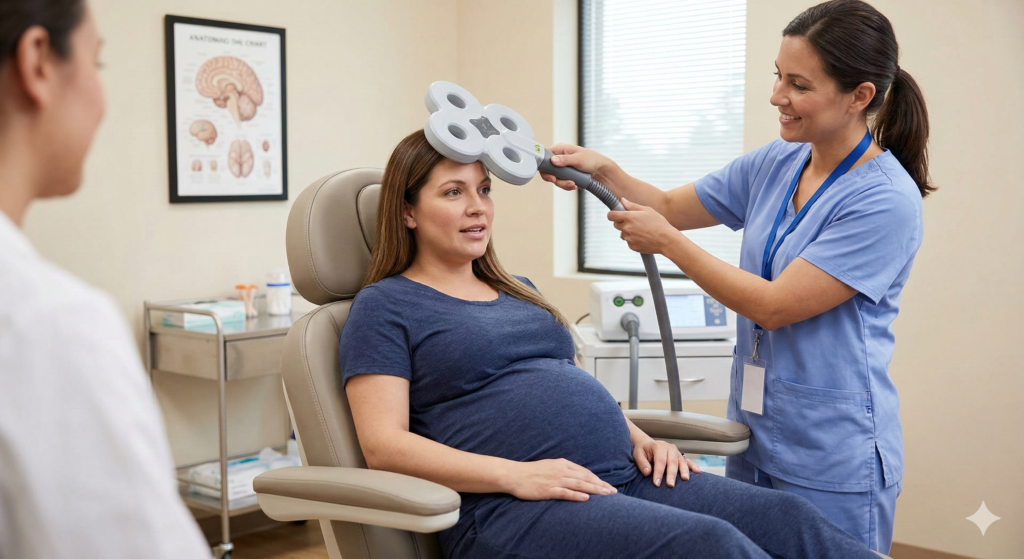
At its core, TMS therapy during pregnancy works the same way it does outside pregnancy. A coil is placed near the scalp, magnetic pulses are delivered to a targeted area of the brain, and repeated sessions aim to improve activity in mood related networks. The American Psychiatric Nurses Association explains that TMS helps stimulate underactive brain regions or calm overactive ones, supporting neuroplasticity over time.
What makes TMS therapy during pregnancy attractive is not that it is effortless, but that it is structured and localized. It usually involves multiple outpatient sessions over several weeks. In practical terms, that means no daily pill, no systemic drug exposure, and no sedative recovery period after each session. For some women, TMS in pregnancy becomes a realistic middle path between psychotherapy alone and medication based care. It can also be part of a broader depression treatment during pregnancy plan that includes psychotherapy, sleep support, and close obstetric follow up.
What Are the Benefits of TMS in Pregnancy for Depression Treatment
One of the biggest strengths of TMS in pregnancy is that it answers a very specific need. Some women need more than talk therapy, but they are hesitant about medication exposure during pregnancy. In that situation, TMS may serve as a non medication treatment for depression during pregnancy. That does not make it automatically better than medication in every case. It simply makes it a valuable option in the right clinical context.
Another benefit is tolerability. A 2021 systematic review and meta analysis found a significant therapeutic effect of repetitive transcranial magnetic stimulation for peripartum depression and reported no severe side effects to mothers or fetuses in the included studies. That matters because the question is never only whether a treatment can work. It is whether it can work with an acceptable safety profile during a uniquely vulnerable phase of life. For that reason, TMS in pregnancy is increasingly discussed as an alternative to antidepressants during pregnancy for some patients, especially when the risk benefit balance favors a non systemic approach.
What Are the Potential Risks and Considerations of TMS in Pregnancy
TMS in pregnancy is promising, but it is not risk free, and it is not a self help solution. The most commonly reported side effects of TMS in general are mild, such as headache or scalp discomfort. Existing safety reviews also stress the importance of screening, proper protocols, and professional supervision before treatment begins.
This is also where expectations need to stay grounded. The current literature is still relatively small, protocols differ between studies, and larger standardized trials are still needed. So while the question of whether TMS is safe during pregnancy can be answered with cautious optimism, it should still be answered inside a doctor’s office, not just on a search results page. That is especially true if depression is severe, suicidal thoughts are present, or other psychiatric conditions complicate the picture.
Is TMS Therapy Safe While Breastfeeding
This question matters because many women are not only thinking about pregnancy. They are already planning for the postpartum period and wondering what happens next. The evidence available so far is reassuring. Research found a good safety and tolerability profile even during breastfeeding, and a postpartum depression study reported no breastfeeding disruption after treatment. That is why TMS in pregnancy is often discussed alongside postpartum planning, especially when clinicians are trying to create continuity of care. If you are specifically looking for TMS therapy while breastfeeding, the current evidence is limited but supportive rather than alarming.
This is also where the treatment becomes relevant for new mothers dealing with severe symptoms after delivery. Research on TMS for postpartum depression suggests improvement in depression and anxiety scores, with sustained benefits seen at follow up in small studies. That does not replace personalized care, but it does expand the treatment conversation in a meaningful way.
Who May Consider TMS Therapy During Pregnancy
Not every pregnant woman with depression needs TMS, but some should absolutely know it exists. TMS therapy during pregnancy may be worth discussing if symptoms are moderate to severe, psychotherapy alone is not enough, medication risks or preferences make pharmacologic treatment difficult, or there is a history of poor response to standard options. In that setting, TMS in pregnancy becomes a clinically relevant discussion, not just an internet trend.
It may also be especially relevant for women who want a treatment plan that reduces fetal drug exposure while still addressing real suffering. The right next step is not self diagnosis. It is a coordinated conversation with a psychiatrist, obstetrician, and where available, a clinic experienced in TMS therapy during pregnancy.
Overall…
Depression during pregnancy is a serious condition, and choosing the right treatment can feel overwhelming. While research is still evolving, current evidence suggests that TMS in pregnancy may offer a promising non medication option for some women experiencing depression. Because it works without introducing drugs into the bloodstream, TMS therapy during pregnancy is increasingly being explored as a safe and effective approach under proper medical supervision. However, every pregnancy and mental health journey is unique, which is why professional guidance is essential before starting any treatment.
If you or someone you love is struggling with depression during pregnancy or after childbirth, the specialists at Mind Brain Institute are here to help. Contact us today to learn more about advanced, personalized mental health treatments designed to support both mother and baby.

Dr. Anuranjan Bist stands as a pioneering figure in the field of mental health, seamlessly blending traditional psychiatric methods with holistic wellness practices. With a profound understanding of the human mind and body, Dr. Bist has redefined therapeutic approaches by integrating Transcranial Magnetic Stimulation (TMS) and Ketamine therapy with ancient yoga techniques, showcasing his innovative spirit and dedication to comprehensive care.