Understanding tVNS Therapy for Depression and Its Role in TRD
There’s a kind of silence that comes with depression when nothing seems to work anymore.
You take the medications. You show up for therapy. You try to follow every recommendation given with hope, discipline, and patience. And yet, somewhere in the background, the heaviness stays. The fog doesn’t fully lift. The mind doesn’t fully quiet. This is the space where many individuals find themselves when dealing with Treatment-Resistant Depression (TRD). And it’s often here, right at this intersection of effort and uncertainty, that new possibilities begin to matter.
One of those possibilities is tVNS therapy for depression treatment that doesn’t try to flood the system with chemicals, but instead works quietly, directly, and intentionally on the brain circuits that regulate mood. Even more importantly, it belongs to a category that many patients today actively seek: non-invasive VNS for depression, a way to explore advanced treatment without stepping into surgery or high-risk interventions. But beyond the clinical language, the real question is simple: Can this actually help when other treatments haven’t? To answer that, we need to understand what tVNS really is and what it is not.
What is tVNS Therapy?
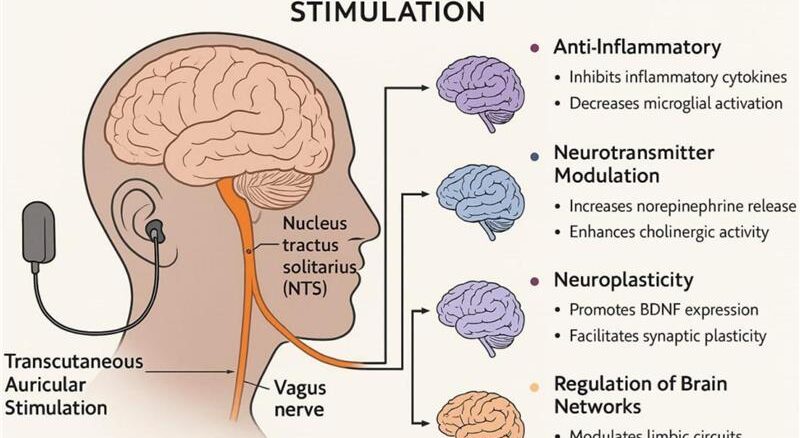
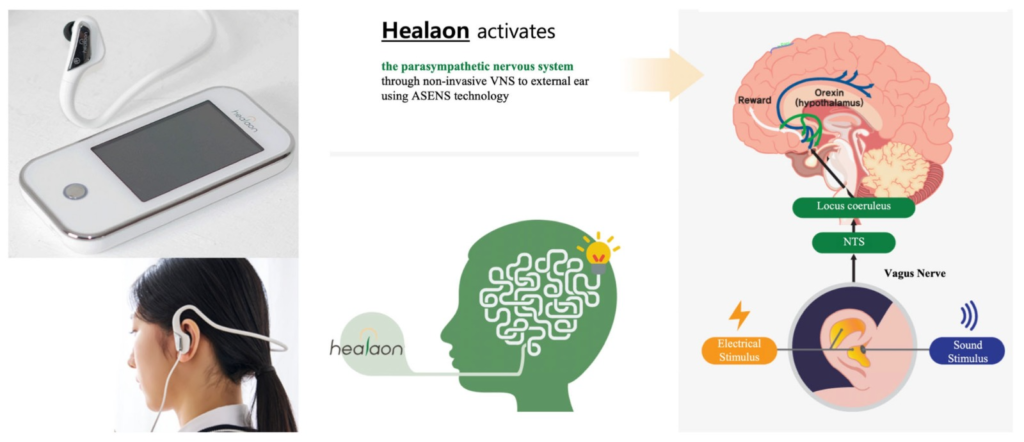
Transcranial vagus nerve stimulation (tVNS) therapy for depression is based on one of the most important communication pathways in the human body, the vagus nerve. This nerve connects the brain to multiple organs and plays a crucial role in regulating mood, stress response, and emotional balance. When this system is out of sync, it can contribute to persistent depressive symptoms, anxiety, and a sense of internal dysregulation. Traditional vagus nerve stimulation has been used for years, but it requires surgically implanting a device.TVNSS changes that completely. Instead of surgery, non-invasive VNS for depression uses small electrodes placed gently on specific parts of the ear, areas like the tragus or cymba conchae, where branches of the vagus nerve are accessible through the skin. From there, mild electrical pulses stimulate these nerve pathways, sending signals back to the brain.
Over time, this stimulation is believed to influence key brain networks, including those involved in rumination, emotional processing, and self-referential thinking, such as the default mode network (DMN).
Why tVNS Is Truly Non-Invasive
One of the most defining aspects of tVNS therapy for depression is what it does not require. No surgery. No anesthesia. No hospital stay. This makes non-invasive VNS for depression fundamentally different from implanted VNS devices. The treatment is typically self-administered using a small portable device with ear clip electrodes. Sessions can be done at home, making it easy to integrate into daily life.
Side effects are generally mild and localized:
- Tingling in the ear
- Minor skin irritation
- Occasional mild headaches
For many patients, this ease and safety are what make the treatment approachable.
Does tVNS Therapy for Depression Actually Work?
The evidence for tVNS therapy for depression is still growing, but early findings are encouraging. Clinical studies in individuals with treatment-resistant depression have shown:
- Reduction in depression severity (HAMD-17 scores)
- Improvement in anxiety and sleep
- Reduction in feelings of hopelessness
What stands out is that patients often notice broader changes:
- Better focus
- Improved motivation
- Reduced emotional heaviness
There is also emerging evidence that non-invasive VNS for depression may improve cognitive speed and help with anhedonia. However, this is not an overnight solution. The effects of tVNS therapy for depression build gradually over weeks or months, reflecting bigger neurological changes. Studies comparing active stimulation with placebo show that real tVNS produces stronger results, reinforcing its biological impact.
At the same time, limitations exist:
- Smaller sample sizes
- Variation in protocols
- Need for larger clinical trials
Still, the direction of research is promising.
Not every treatment fits every individual. But tVNS therapy for depression becomes especially relevant in certain situations. It is often considered when:
- Multiple antidepressants have failed (TRD)
- Symptoms persist despite therapy
- Patients want to avoid invasive procedures
For those seeking non-invasive VNS for depression, this approach offers a middle ground more advanced than medication alone, yet less intensive than surgical interventions. It is usually used as an add-on treatment alongside medication or therapy, rather than a replacement. In some cases, it can also help determine whether vagus nerve stimulation might work before considering implanted options. And for many, the decision comes down to one thing: It feels manageable.
How Does tVNS Compare to Other Brain Stimulation Treatments?
Compared to treatments like rTMS and Deep TMS, tVNS therapy for depression offers a different experience. rTMS and Deep TMS:
- Clinic-based
- Structured sessions
- Target specific brain regions
tVNS:
- Home-based
- Portable
- Works through broader neural pathways
Compared to implanted VNS:
- No surgery
- No long-term implantation
- Flexible and reversible
Each treatment has its place, but non-invasive VNS for depression stands out for its accessibility.
Benefits of tVNS Therapy for Depression
- Non-invasive and safe
- Home-based and convenient
- Minimal side effects
- Can complement existing treatments
- Promising option for TRD
For many, it represents not just another treatment, but a different way forward.
What Patients Should Realistically Expect
It’s important to approach tVNS therapy for depression with balanced expectations. It is not a quick fix. It requires consistency. And it may not work for everyone. But for those who feel stuck, non-invasive VNS for depression offers a meaningful option, one that aligns with both safety and scientific rationale.
A Thoughtful Approach to tVNS Therapy for Depression at Mind Brain Institute
For someone living with treatment-resistant depression, the hardest part is often not just the symptoms but the quiet belief that nothing will truly change. At Mind Brain Institute, treatments like tVNS therapy for depression are never approached as a one-size-fits-all solution. Instead, the focus is on careful evaluation, personalization, and understanding the full picture. This means looking closely at:
- Individual symptom patterns
- Past treatment history
- The overall mental health context
Because effective treatment is not just about what works in theory It’s about what works for you. In that space, non-invasive VNS for depression becomes more than just another option. It becomes a different way of thinking about recovery. Not as a miracle. Not as a last resort. But as a thoughtful, non-invasive approach that works with the brain slowly, steadily, and intentionally. And sometimes, that shift in approach is where real progress begins.
Disclaimer
tVNS therapy for depression is based on evolving clinical research and may still be considered experimental in certain settings. Always consult a qualified mental health professional before starting any new treatment.

Dr. Anuranjan Bist stands as a pioneering figure in the field of mental health, seamlessly blending traditional psychiatric methods with holistic wellness practices. With a profound understanding of the human mind and body, Dr. Bist has redefined therapeutic approaches by integrating Transcranial Magnetic Stimulation (TMS) and Ketamine therapy with ancient yoga techniques, showcasing his innovative spirit and dedication to comprehensive care.