
For decades, mental health treatment has relied on what patients feel and what doctors observe. Treatment progress traditionally was measured through conversations, behavior, and time. But now, something extraordinary is changing the way we understand recovery.
With the rise of advanced brain imaging, we are no longer guessing. We are witnessing transformation as it unfolds. At the center of this shift lies TMS-induced neuroplasticity, a process where the brain actively rewires itself under targeted stimulation. This is not just science. This is a new reality. A reality where healing is visible, measurable, and deeply personal.
What Is TMS-Induced Neuroplasticity and Why Does It Matter?
The human brain is not fixed. It is constantly evolving, adapting, and reshaping itself. This ability is known as neuroplasticity. It is how we learn new skills, recover from injuries, and regulate emotions. But in conditions like depression, anxiety, and chronic stress, this natural flexibility becomes disrupted. The brain gets stuck in patterns that reinforce negative thoughts and emotional imbalance. This is where TMS-induced neuroplasticity becomes powerful.
Through controlled magnetic stimulation, TMS activates specific brain regions, especially those responsible for mood and decision-making. Over repeated sessions, these activations begin to form new neural connections. The brain slowly moves away from dysfunctional pathways and starts building healthier ones. What makes TMS-induced neuroplasticity different is that it does not just manage symptoms. It works at the level where the problem begins.
How Does TMS Actually Create Neuroplastic Changes in the Brain?
At first glance, TMS may seem simple. A device delivers magnetic pulses to the brain. But beneath that simplicity lies a profound transformation. Each pulse stimulates neurons in targeted areas. Initially, the effect is temporary. But with repetition, something deeper begins to happen.
This is where TMS-induced neuroplasticity takes shape. The brain starts responding differently:
- Neurons fire more efficiently.
- Weak connections begin to strengthen
- Overactive circuits gradually calm down
The prefrontal cortex, often underactive in depression, becomes more engaged. Communication between emotional and cognitive regions improves. Slowly, the brain begins to reorganize itself. This is not an instant change. It is a gradual rewiring, built session by session.
How Does fMRI Reveal TMS-Induced Neuroplasticity in Real Time?
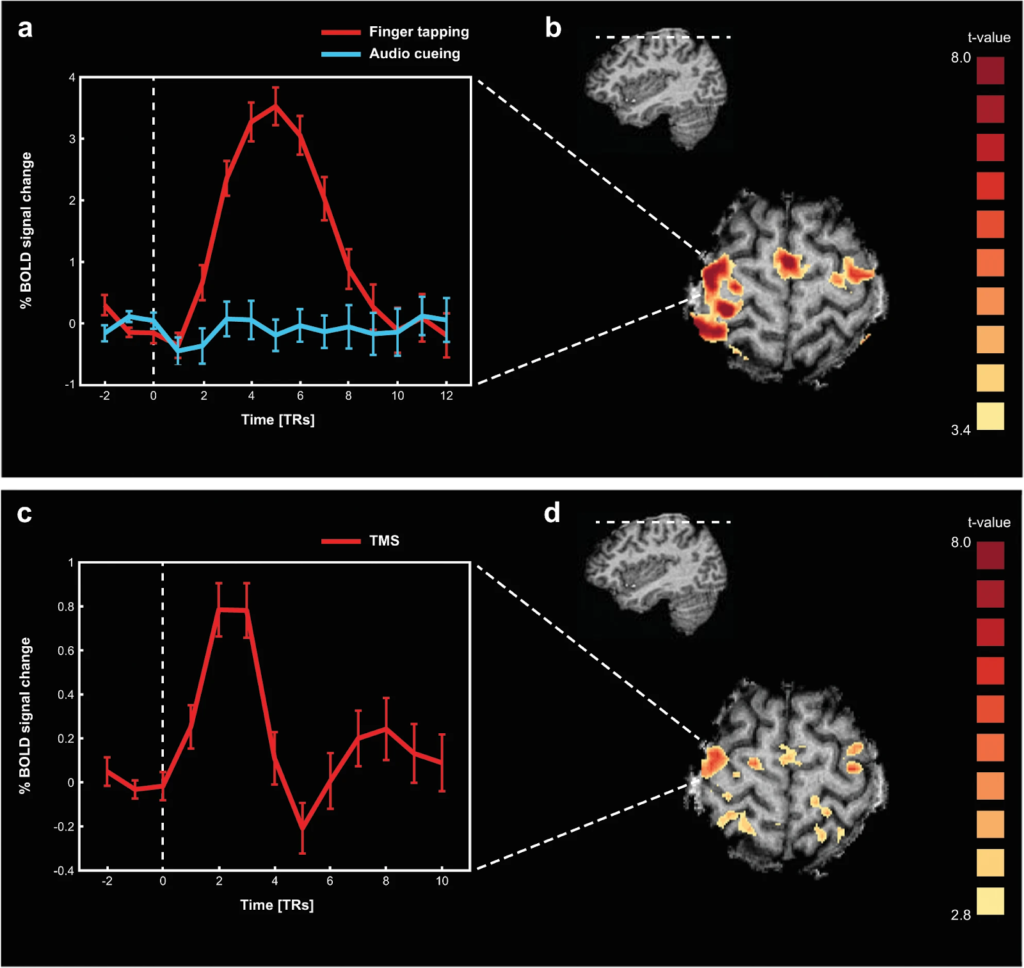
Imagine being able to observe your brain while it heals. Functional MRI makes this possible. It tracks changes in blood flow, allowing us to see which parts of the brain are active at any given moment. When studying TMS induced neuroplasticity, fMRI reveals something remarkable.
It shows that areas once silent begin to activate. Regions that were disconnected start communicating again. Emotional centers that were overactive begin to stabilize. This is especially evident in the connection between the prefrontal cortex and the limbic system. As these connections strengthen, emotional regulation improves. What was once invisible is now clearly observable. And that visibility changes everything.
What Does EEG Reveal About Brain Activity During TMS Therapy?
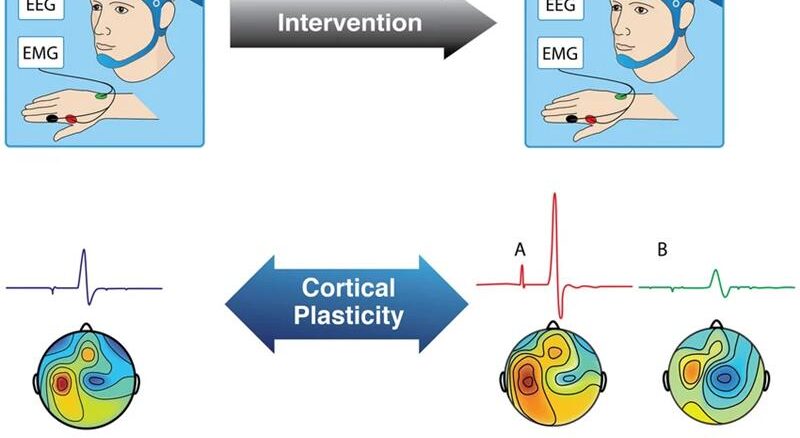
While fMRI shows where change is happening, EEG shows how quickly it happens. EEG captures the brain’s electrical activity in real time. It records brainwaves, offering insight into the brain’s moment-to-moment functioning. In the context of TMS induced neuroplasticity, EEG reveals the brain’s immediate response to stimulation. During treatment, patterns begin to shift:
- Brainwaves become more stable.
- Erratic activity starts reducing
- Different regions begin to synchronize
These changes may seem subtle, but they are significant. They indicate that the brain is not just reacting. It is adapting continuously. This real-time responsiveness is what makesTMS-inducedd neuroplasticity so dynamic and powerful.
What Is the Difference Between fMRI and EEG in Measuring Neuroplasticity?
Both fMRI and EEG provide valuable insights, but they tell different parts of the story. fMRI focuses on structure and location. It shows which regions are active. EEG focuses on timing. It reveals how quickly and efficiently the brain responds. When studying TMS induced neuroplasticity, combining both creates a complete picture.
- fMRI answers where the change is happening
- EEG explains how the change is unfolding
Together, they transform brain activity into something we can truly understand.
Which Brain Regions Are Most Affected by TMS-Induced Neuroplasticity?
One of the most fascinating aspects of TMS-induced neuroplasticity is that it does not work in isolation. It affects entire networks.
(Source: Peters et al., 2020)
Key regions include:
- The prefrontal cortex, responsible for decision-making and emotional control
- The amygdala, which processes fear and stress
- The hippocampus is involved in memory and emotional balance
But the real transformation happens in how these regions communicate. The brain begins to function as a coordinated system. Signals flow more efficiently. Emotional responses become more balanced. Thoughts become clearer. This network-level change is what makes recovery feel real.
What Does Clinical Evidence Say About TMS-Induced Neuroplasticity?
Clinical observations consistently support the impact of TMS induced neuroplasticity. Patients often report:
- Improved mood and emotional stability
- Reduced anxiety and stress
- Better focus and cognitive clarity
What makes this even more compelling is that these improvements are not just subjective. They align with measurable changes in brain activity. This connection between what patients feel and what science shows strengthens the foundation of TMS-induced neuroplasticity as a treatment approach.
How Does Real-Time Brain Monitoring Improve TMS Outcomes?
Real-time monitoring has changed the way treatment is delivered. Instead of following a fixed protocol, clinicians can now adjust therapy based on how the brain responds. This creates a more personalized approach. With TMS-induced neuroplasticity, this means:
- More precise targeting of brain regions
- Faster identification of effective patterns
- Continuous optimization of treatment
This adaptability ensures that therapy is not just effective, but tailored to each individual.
What Are the Limitations of Measuring Neuroplasticity Today?
Despite its promise, measuring neuroplasticity is not without challenges.
- fMRI technology is expensive and not always accessible
- EEG requires specialized expertise
- Brain responses can vary from person to person
These challenges highlight the need for continued innovation. However, they do not diminish the importance of TMS-induced neuroplasticity.
What Is the Future of TMS-Induced Neuroplasticity Research?
The future of TMS induced neuroplasticity is moving toward precision and integration. Emerging advancements are focusing on:
- AI-driven treatment adjustments
- Real-time adaptive stimulation
- Broader applications in neurological and cognitive health
As research continues, the ability to observe and influence brain function will become even more refined.
Conclusion
For years, the brain remained a mystery in mental health treatment. We treated what we could not see. Today, that is no longer the case as TMS-induced neuroplasticity represents a turning point. It shifts the focus from managing symptoms to transforming the brain itself. With tools like fMRI and EEG, we are no longer relying on assumptions. We are witnessing real change in real time. And in that moment, recovery becomes more than a possibility. It becomes visible.

Dr. Anuranjan Bist stands as a pioneering figure in the field of mental health, seamlessly blending traditional psychiatric methods with holistic wellness practices. With a profound understanding of the human mind and body, Dr. Bist has redefined therapeutic approaches by integrating Transcranial Magnetic Stimulation (TMS) and Ketamine therapy with ancient yoga techniques, showcasing his innovative spirit and dedication to comprehensive care.
