Understanding Depression Endophenotypes and Biology Based Depression Subtypes
Depression is often treated as if it were a single condition. A checklist of symptoms leads to a diagnosis, and that diagnosis leads to treatment. On paper, it looks structured. In reality, it is far more complicated.
Two people can walk into a clinic with identical symptoms, such as low mood, fatigue, loss of motivation, and yet respond completely differently to the same treatment. One improves. The other does not.
This inconsistency is not a failure of treatment. It is a limitation of how we define depression. The brain is not uniform. And neither is depression. This is where depression endophenotypes begin to change the conversation. Instead of asking what depression looks like, they ask what depression is at a biological level.
What If Depression Is Not One Disorder but Many Hidden Biological Patterns
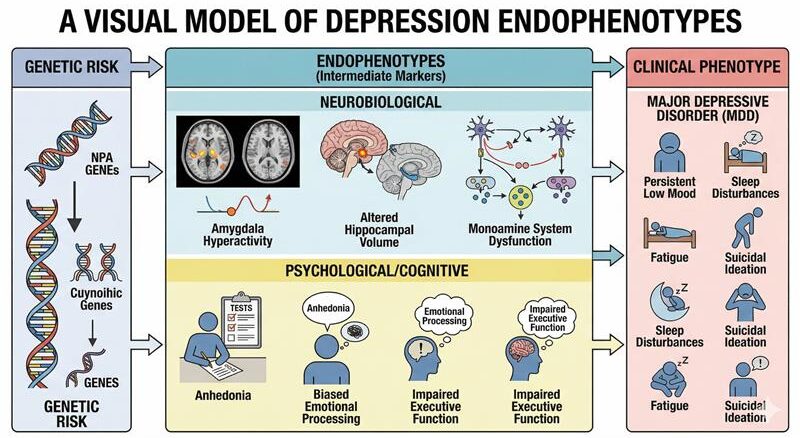
The idea behind depression endophenotypes is simple, yet powerful. Depression is not a single disorder but a collection of underlying biological patterns that express themselves as similar symptoms.
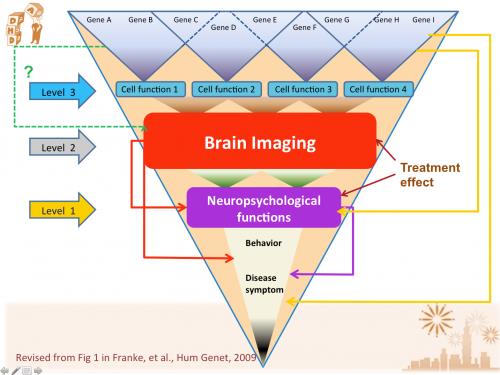
These patterns are not visible on the surface. They exist deeper in brain circuits, neurotransmitter systems, stress responses, and even immune activity. Endophenotypes act as intermediate markers between genes and behavior. They are measurable, objective, and stable over time.
Research highlighted in Nature Genetics research on endophenotypes explains how these markers help connect complex psychiatric symptoms to their biological roots. In essence, depression endophenotypes give us a way to see the invisible architecture of depression.
Why Do Two People With the Same Symptoms Respond to Completely Different Treatments
This is one of the most important questions in mental health. Why does one person respond to medication while another does not? Why does therapy work for some but feel ineffective for others? The answer lies in depression subtypes.
What appears as the same condition may actually be driven by entirely different biological mechanisms. One person’s depression may be linked to inflammation. Another’s may be rooted in neurotransmitter imbalance. A third may involve dysfunction in specific brain circuits.
Without identifying these differences, treatment becomes a process of trial and error. Depression endophenotypes eliminate this guesswork by identifying the underlying biological drivers, allowing treatment to align with the root cause rather than just the symptoms.
What Makes Depression Endophenotypes the Missing Link in Psychiatry
For something to qualify as an endophenotype, it must meet strict scientific criteria.
It must be:
- Heritable, showing a genetic connection
- State-independent, meaning it exists even outside depressive episodes
- Objectively measurable, through tools like brain mapping or biomarkers
- Specific, linked to certain depression subtypes
As outlined in the ScienceDirect explanation of endophenotypes, these traits provide a stable and reliable way to understand psychiatric disorders biologically. This is what psychiatry has been missing, a framework that goes beyond observation and into measurable science.
What Are the Hidden Biological Systems Driving Different Depression Subtypes
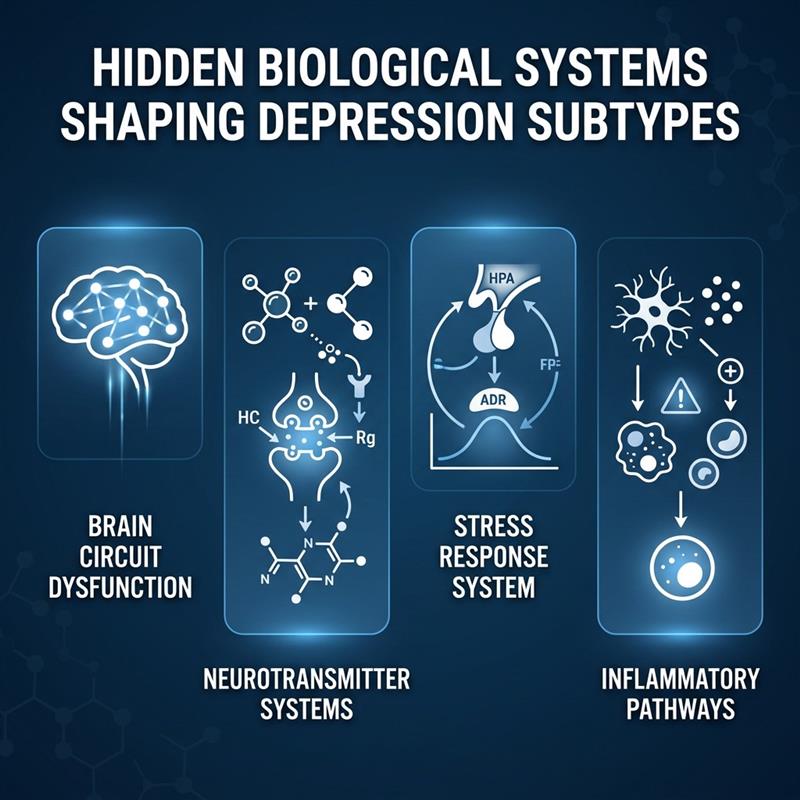
To truly understand depression endophenotypes, we need to look at the systems they emerge from.
Brain Circuit Dysfunction
The interaction between the prefrontal cortex and limbic system determines how we regulate emotions. Imbalances here can lead to persistent negative thinking and emotional instability.
Neurotransmitter Systems
Chemicals like serotonin, dopamine, and glutamate influence mood, motivation, and reward. Variations in these systems define distinct depression subtypes.
Stress Response System
The HPA axis controls cortisol levels. Chronic stress can dysregulate this system, creating a biological environment that sustains depression.
Inflammatory Pathways
Emerging evidence shows that inflammation plays a significant role in certain forms of depression, further reinforcing the idea of biologically distinct subtypes. Each of these systems contributes to unique DEPRESSION ENDOPHENOTYPES, shaping how depression develops and responds to treatment.
How Do Scientists Actually Measure Depression Endophenotypes in the Brain
What makes depression endophenotypes powerful is that they can be measured. One of the most effective tools is brain mapping. Techniques like QEEG analyze electrical activity in the brain and identify patterns associated with different depression subtypes. At QEEG brain mapping at Mind Brain Institute, clinicians use this technology to understand how different regions of the brain are functioning and interacting.
Other methods include:
- Neuroimaging for structural and functional insights
- Hormonal testing for cortisol levels
- Blood markers for inflammation
- Genetic and epigenetic analysis
These tools turned depression endophenotypes into actionable clinical insights.
How Does This Approach Turn Diagnosis From Guesswork Into Precision
Traditional diagnosis depends heavily on what patients report. While important, this approach often lacks biological clarity. With depression endophenotypes, diagnosis becomes data-driven.
Clinicians can:
- Identify specific depression subtypes
- Understand the biological origin of symptoms
- Predict how a patient will respond to treatment
This reduces the uncertainty that has long defined mental health care. When you understand the biology, treatment stops being experimental and starts being intentional.
What Happens When Treatment Finally Matches the Biology of Depression
When treatment aligns with biology, the difference is profound. Instead of generalized approaches, interventions can target specific depression endophenotypes:
- TMS for correcting dysfunctional brain circuits
- Neurofeedback for regulating brain activity
- Medications tailored to neurotransmitter imbalances
This leads to:
- Faster improvement
- Reduced relapse
- More sustainable recovery
Patients are no longer treated based on symptoms alone. They are treated based on how their brain actually functions.
How Does Neuroplasticity Help Rewire Depression at Its Core
The brain is not fixed. It is adaptable. Neuroplasticity allows the brain to reorganize itself in response to targeted interventions. When treatments are aligned with depression endophenotypes, they can directly influence the circuits responsible for depressive patterns.
Over time, this leads to:
- Stronger emotional regulation
- Improved cognitive flexibility
- Long-term stabilization
This is not just symptom relief. It is a structural change. For deeper insights into evolving mental health approaches, you can explore resources on the Mind Brain Institute blogs.
How Is Mind Brain Institute Bringing This Science Into Real Treatment
The concept of depression endophenotypes is not just theoretical. It is already shaping real-world care. At Mind Brain Institute, the approach begins with identifying measurable brain patterns using tools like QEEG brain mapping. Instead of relying solely on symptom descriptions, clinicians focus on biological data. This enables:
- Personalized treatment plans
- Reduced trial-and-error
- Integration of advanced therapies like TMS and neurofeedback
- Focus on long-term functional recovery
By combining neuroscience with clinical expertise, the institute translates research into meaningful outcomes for patients.
What Is Slowing Down the Adoption of This Breakthrough Approach
Despite its promise, the adoption of depression endophenotypes is still evolving. Advanced diagnostic tools are not yet widely accessible. Clinical frameworks are still being standardized. Costs can be a limiting factor. Additionally, psychiatry is in the middle of a transition from symptom-based models to biology-driven systems. But as research continues and technology becomes more accessible, these barriers are expected to diminish.
Is This the Future of Mental Health Care We Have Been Waiting For
The future of psychiatry is no longer about managing symptoms. It is about understanding the brain with precision. As neuroscience, artificial intelligence, and data-driven diagnostics advance, depression endophenotypes are redefining how we identify and treat mental health conditions. What once appeared as a single diagnosis is now being understood as a spectrum of biologically distinct depression subtypes.
Instead of relying on broad clinical labels, mental health care is moving toward:
- Personalized diagnosis grounded in measurable biology
- Predictive treatment models that anticipate response
- Preventive mental health care that identifies risk early
This is not just progress. It is a fundamental shift. From uncertainty to clarity. From trial and error to precision. From generalized care to truly personalized treatment.
Conclusion
Depression is not one condition; it is many. Depression endophenotypes provide the scientific lens needed to understand this complexity. By focusing on measurable biological traits, they transform how depression is diagnosed, classified, and treated. Identifying true depression subtypes means moving beyond guesswork and toward targeted, effective care.
This is where mental health is heading. And for the first time, we are not just treating depression. We are beginning to understand it.

Dr. Anuranjan Bist stands as a pioneering figure in the field of mental health, seamlessly blending traditional psychiatric methods with holistic wellness practices. With a profound understanding of the human mind and body, Dr. Bist has redefined therapeutic approaches by integrating Transcranial Magnetic Stimulation (TMS) and Ketamine therapy with ancient yoga techniques, showcasing his innovative spirit and dedication to comprehensive care.