For decades, brain stimulation therapies have offered hope to people living with complex neurological and psychiatric conditions. Yet, many of these treatments have operated in a one-size-fits-all manner, delivering fixed stimulation without adapting to what the brain actually needs in real time.
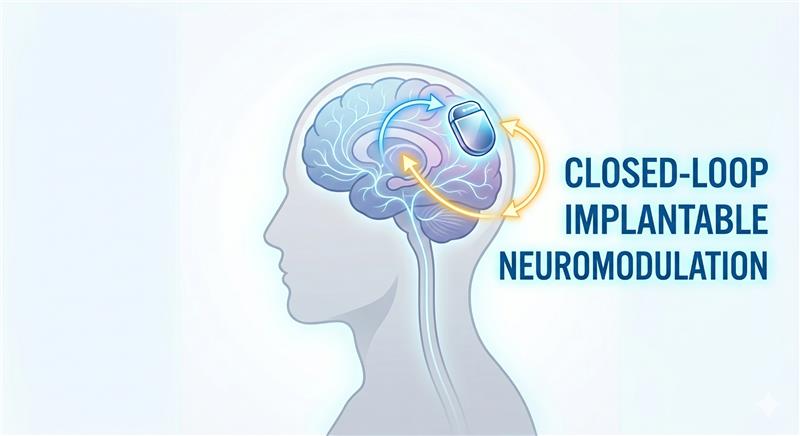
This is where closed-loop implantable neuromodulation systems represent a meaningful shift. Instead of delivering constant stimulation, these systems listen to the brain, interpret its signals, and respond dynamically. It’s a move from static treatment to intelligent, responsive therapy.
As research advances, these systems are being explored across conditions like depression, Parkinson’s disease, and epilepsy. But what exactly makes them so different, and why are clinicians and researchers paying such close attention?
What Are Closed-Loop Implantable Neuromodulation Systems?
At their core, closed-loop implantable neuromodulation systems are medical devices designed to both monitor and influence brain activity. Unlike traditional “open-loop” systems, which deliver pre-set stimulation, closed-loop systems adjust their output based on real-time brain signals.
Think of it like a thermostat. Instead of constantly blasting heat, it senses the room temperature and adjusts accordingly. Similarly, these systems detect specific neural patterns and respond with targeted stimulation only when needed.
These systems are a type of implantable neurostimulation device, meaning they are surgically placed within the body and connected to specific regions of the brain or nervous system. Their defining feature is the feedback loop, continuous sensing, analysis, and response.
How Do Closed-Loop Neuromodulation Systems Work in Real Time?
The functioning of these systems can be broken down into three essential steps:
- Sensing: The device monitors brain signals, often using electrical patterns known as local field potentials or EEG signals.
- Processing: Built-in algorithms analyse these signals to detect abnormalities or patterns associated with symptoms.
- Stimulation: When needed, the device delivers targeted electrical stimulation to restore balance.
This process happens in milliseconds, making it a form of real-time brain stimulation technology. Some advanced systems are even beginning to integrate elements of AI-driven neuromodulation systems, allowing them to “learn” and improve their responses over time.
A well-known example is responsive neurostimulation for epilepsy, where devices detect seizure activity and intervene before it fully develops. According to research, such approaches are showing promising results in reducing seizure frequency.
Why Are Closed-Loop Systems Considered a Breakthrough in Neuromodulation?
Traditional neuromodulation therapies, such as early forms of deep-brain stimulation, operate in an open-loop manner. While effective, they lack adaptability. This can lead to over-stimulation, under-stimulation, or fluctuating results.
Closed-loop systems change that by introducing precision and responsiveness.
Here’s what makes them stand out:
- Personalisation: Therapy adapts to the individual brain in real time
- Efficiency: Stimulation is delivered only when needed
- Reduced side effects: Lower risk of overstimulation
- Improved outcomes: Especially in complex or fluctuating conditions
This is why they are increasingly associated with adaptive neuromodulation therapy, a field focused on tailoring interventions to each patient’s unique neural patterns.
What Conditions Can Benefit from Closed-Loop Neuromodulation?
The potential applications of closed-loop implantable neuromodulation systems are expanding rapidly. While some uses are already clinically established, others are still under investigation.
Epilepsy
Closed-loop systems are already being used to detect and interrupt seizures before they escalate, significantly improving quality of life.
Parkinson’s Disease
In Parkinson’s, brain activity fluctuates throughout the day. Adaptive stimulation can help manage symptoms like tremors more effectively than fixed stimulation.
Treatment-Resistant Depression
This is one of the most exciting areas of research. Studies from institutions like the University of California, San Francisco, have demonstrated that personalised brain stimulation, triggered by specific neural patterns, can lead to meaningful symptom relief in patients who have not responded to conventional treatments.
Other Areas
Research is ongoing in conditions like OCD, chronic pain, and anxiety disorders. However, it’s important to note that evidence varies across conditions, and not all applications are equally established.
How Do Closed-Loop Adaptive Neuromodulation Devices Improve Personalisation?
This is where the concept of closed-loop adaptive neuromodulation devices becomes particularly powerful. Every brain is different, not just between individuals, but even within the same person across different times of the day. Mood, stress, sleep, and environment all influence neural activity.
Closed-loop systems account for this variability by:
- Identifying patient-specific neural biomarkers
- Delivering stimulation only during symptom-relevant states
- Continuously refining responses based on feedback
This approach reduces the trial-and-error process often associated with psychiatric treatments and moves us closer to personalised brain stimulation therapy.
What Are the Key Technologies Behind Closed-Loop Neuromodulation?
Behind these systems lies a combination of advanced technologies:
- Neural sensors: Capture electrical activity from the brain
- Signal processing algorithms: Interpret complex neural data
- Feedback mechanisms: Enable real-time adjustments
- Implantable hardware: Ensures long-term, stable operation
Increasingly, machine learning is being used to improve accuracy and adaptability. According to research published by the NIH, integrating computational models with neural data is accelerating progress in this field.
Are Closed-Loop Implantable Neuromodulation Systems Safe and Clinically Proven?
Safety and clinical validation are critical when discussing any implantable therapy.
Currently, certain closed-loop systems, especially in epilepsy, have received regulatory approval and are in clinical use. Others, particularly in psychiatry, are still being evaluated in controlled trials.
Key considerations include:
- Surgical risks associated with implantation
- Long-term device reliability
- Data accuracy and interpretation
While early results are promising, it is essential to maintain a balanced perspective. These systems are not a universal solution, and their use must be guided by experienced clinicians and robust evidence.
What Are the Limitations and Challenges of Closed-Loop Neuromodulation?
Despite their potential, these systems are not without challenges:
- High cost: Limits accessibility
- Complexity: Requires specialised expertise
- Surgical requirement: Not suitable for all patients
- Data interpretation: Brain signals are complex and variable
Additionally, long-term data is still evolving, especially in psychiatric applications. This highlights the importance of continued research and ethical clinical use.
What Does the Future Hold for Closed-Loop Brain Stimulation?
The future of neuromodulation is moving toward smarter, more integrated systems. We are likely to see:
- Greater use of AI for predictive stimulation
- Expansion into mental health treatments
- Hybrid systems combining invasive and non-invasive approaches
- Improved accessibility over time
As understanding of the brain deepens, closed-loop brain stimulation could become a cornerstone of modern neuroscience-driven care.
How Are Advanced Neuromodulation Approaches Being Used in Modern Clinical Practice?
While implantable systems are still evolving, many clinics today are already applying neuroscience-based, non-invasive neuromodulation techniques.
At Mind Brain Institute, the focus is on personalised, evidence-based care using advanced therapies such as TMS, Ketamine Assisted Therapy, and many non-invasive treatments. These approaches aim to regulate brain activity without the need for surgery, offering safe and effective alternatives for many individuals.
The broader goal remains the same: to move toward treatments that are precise, adaptive, and tailored to the individual.
Conclusion
Closed-loop implantable neuromodulation systems represent a significant step forward in how we understand and treat brain-related conditions. By shifting from fixed stimulation to adaptive, real-time intervention, these systems bring us closer to truly personalised care.
At the same time, it’s important to recognise that this field is still evolving. While the promise is real, so is the need for continued research, careful clinical application, and ethical responsibility.
What remains clear is this: the future of brain treatment is not just about stimulation, it’s about understanding, adapting, and working with the brain in a far more intelligent way than ever before.

Dr. Anuranjan Bist stands as a pioneering figure in the field of mental health, seamlessly blending traditional psychiatric methods with holistic wellness practices. With a profound understanding of the human mind and body, Dr. Bist has redefined therapeutic approaches by integrating Transcranial Magnetic Stimulation (TMS) and Ketamine therapy with ancient yoga techniques, showcasing his innovative spirit and dedication to comprehensive care.