
All You Need to Know About TMS Therapy for Substance Abuse
Addiction is often misunderstood as a failure of willpower. It is deeply rooted in brain circuitry. Substance Use Disorders (SUDs) alter how the brain processes reward, impulse control, and decision-making.
This is where TMS therapy for substance abuse is beginning to change the conversation. Unlike traditional approaches that focus mainly on behavior, TMS therapy for substance abuse directly targets the brain circuits responsible for craving and relapse. It offers a new layer of treatment that works alongside therapy and medication rather than replacing them.
As research grows, TMS therapy for substance abuse is emerging as one of the most promising innovations in modern addiction treatment.
What Is TMS Therapy for Substance Abuse and How Does It Work?
TMS therapy for substance abuse involves a sterilized electric pulse in an effort to activate target areas of the brain with the help of non-invasive electromagnetic pulses. These pulses affect neural processes without operating or using drugs.
The most targeted regions are:
- Dorsolateral Prefrontal Cortex (DLPFC) – involved in making decisions and impulse control.
- Insula – entails the awareness of craving and withdrawal.
- Medial Prefrontal Cortex (mPFC) – controls reward and behavior.
The fundamental action of the TMS in the treatment of substance abuse is the neuromodulation. It works by:
- Making cravings more controlled at the top.
- Normalization of dopamine concentration in reward systems.
- Rewiring maladaptive circuits between cortico-striatal circuits.
To put it simply, TMS therapy for substance abuse assists the brain in regaining control over automatic and overwhelming urges.
Why Do Time-Tested Addiction Therapies Fail to Work?
Most of the treatments of addictions are based on counseling, medication, or detox. These are necessary; however, the rate of relapse is high. Why? Since the brain circuits, which lead to addiction, are usually undamaged. Craving pathways are still running even after detox. This is where a gaping void is filled by TMS therapy for substance abuse. It directly focuses on the neurological motivation of addiction, which is more comprehensive. TMS treatment of substance abuse can be a significant enhancement of long-term outcomes when used in conjunction with behavioral therapy.
What Does the FDA Approval of TMS Therapy in Addiction Mean?
In 2020, the FDA gave clearance to Deep TMS with the H4 coil as a smoking cessation aid. This was a great milestone in TMS therapy for substance abuse. Why is this important? It confirms the use of brain stimulation in the treatment of addictions. It also makes it possible to expand its uses to other substance use disorders. Although at present, it is only approved to smoke, research findings are encouraging that TMS therapy can be applied to substance abuse in the near future, in other addictions.
How effective is TMS therapy for substance abuse in cocaine and alcohol addiction?
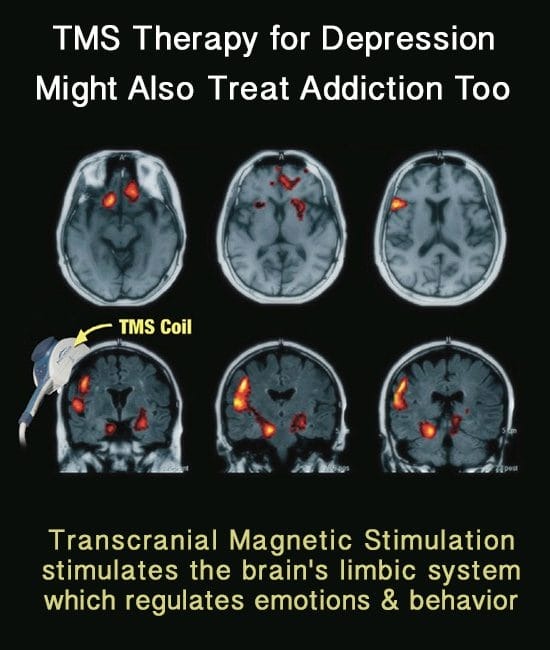
Research shows that TMS therapy is effective across both cocaine and alcohol use disorders, particularly when targeting the prefrontal cortex.
In cocaine use disorder, research has shown that high-frequency rTMS (15 Hz) when delivered over the left DLPFC can be important in reducing cravings and consumption. These benefits are not just short-term, with improvements lasting up to 3 to 6 months, making TMS therapy for substance abuse a valuable tool in relapse prevention.
The DLPFC stimulation (10 to 20 Hz) has also been demonstrated to decrease cravings in alcohol withdrawal patients. Emerging evidence suggests that targeting deeper brain regions such as the medial prefrontal cortex may further enhance outcomes, strengthening the role of TMS therapy for substance abuse in managing alcohol dependence.
How about the methamphetamine addiction?
In methamphetamine use disorder, TMS therapy for substance abuse has shown promising results in:
- Reducing craving
- Improving sleep quality
- Reducing symptoms of depression.
This underscores how TMS can have a wider application in the treatment of addiction to various substances.
What does TMS have to do with rewiring the Brain in Addiction?
Addiction interferes with the equilibrium of impulsive actions and control. Hijacking of the brain occurs literally. TMS therapy for substance abuse works by restoring this balance.
- It increases executive control (DLPFC).
- It decreases craving circuit hyperactivity.
- It enhances dopamine release in the centers of reward.
Imagine that it is a reset of a broken control system. Patients cannot react to triggers automatically, but more slowly, they can pause, think, and make a choice.
How does behavioral priming improve outcomes, and is TMS therapy for substance abuse safe?
One of the most important advancements in TMS therapy for substance abuse is behavioral priming. This therapy will engage the patients to addiction related stimuli, which may include smoking cues, immediately before being stimulated.
Why does this work? Since it makes craving circuits active in real time. When TMS therapy for substance abuse is applied during this activated state, it can more effectively disrupt those neural pathways. This renders the treatment more specific, accurate, and effective.
Another important factor is safety. The good news is that TMS therapy for substance abuse is considered safe and well-tolerated.
- Common side effects include:
- Mild headache
- Scalp discomfort
Serious risks like seizures are rare, occurring in approximately 1 in 1000 patients. Compared to medications, non-invasive brain stimulation for addiction offers a safer alternative with fewer systemic side effects.
What are the latest advances, limitations, and clinical role of TMS therapy for substance abuse?
The field of TMS therapy for substance abuse is evolving rapidly, with several key advancements shaping its future.
There is the development of faster treatment protocols like intermittent theta burst stimulation that help to decrease the treatment time, but still be effective. Meanwhile, it turns out that maintenance sessions can be needed to maintain long-term benefits, particularly in such conditions as cocaine use disorder.
The other potential line is the customized treatment. Clinicians can potentially make the use of TMS more precise for substance use disorders by using brain imaging methods such as fMRI to customize the areas of stimulation depending on the pattern of an individual’s brain.
Nevertheless, it has its limitations. Most of the research is small, large Phase III trials are missing, and the treatment regimen differs across the research environments. As a result, TMS therapy for substance abuse is still considered an emerging treatment outside of smoking cessation.
Nonetheless, its clinical application is becoming more evident due to the limitations. TMS therapy for substance abuse may be especially beneficial for individuals with treatment-resistant addiction, high relapse risk, or co-occurring mental health conditions like depression and anxiety. Nonetheless, it is not a solitary medication, and it functions optimally when combined with treatment and lifestyle modifications.
Compared to traditional approaches, TMS therapy for substance abuse adds a critical layer by addressing brain function directly. Therapy develops coping mechanisms and drugs control symptoms, whereas TMS redesigns neural pathways, developing a more thorough and efficient treatment plan.
What Will Expect During a TMS Treatment Program?
A typical TMS therapy program includes:
- Several-week sessions each day.
- The sessions are between 20 and 40 minutes.
- No anesthesia or downtime
Patients do not have to sleep and can continue with their usual activity. The non-invasive nature of TMS therapy for substance abuse makes it highly accessible.
How Will TMS Therapy Shape the Future of Substance Abuse Treatment?
The future of addiction treatment is evidently moving towards a brain-based direction. TMS therapy for substance abuse represents a major step in that direction by targeting the neural circuits responsible for craving, impulsivity, and relapse.
However, it is important to understand that TMS therapy for substance abuse does not replace traditional care. It strengthens it. It is an effective implementation of a multifaceted treatment plan when used in conjunction with therapy, lifestyle modifications, and clinical support.
This is the most practical point of view because TMS is not a quick fix. It is a scientifically based intervention and becomes effective when applied in a deliberate and guided manner.
At the same time, TMS therapy for substance abuse stands out as one of the most promising developments in modern addiction science. It provides what has been lacking in many patients, namely, direct intervention on a brain circuit level but not a behavior level.
While research is still evolving, the direction is clear. Addiction treatment is moving beyond behavioral models alone and toward neuroscience-driven care that addresses the root of the problem.
If you or someone you care about is struggling with addiction, the next step should not be guesswork. Speak with a qualified mental health professional at Mind Brain Institute who can assess your situation. They can determine whether TMS therapy for substance abuse can be safely and effectively integrated into your recovery plan. Recovery is not just about stopping a substance, it is about rebuilding control, and the right treatment approach can make that possible.

Dr. Anuranjan Bist stands as a pioneering figure in the field of mental health, seamlessly blending traditional psychiatric methods with holistic wellness practices. With a profound understanding of the human mind and body, Dr. Bist has redefined therapeutic approaches by integrating Transcranial Magnetic Stimulation (TMS) and Ketamine therapy with ancient yoga techniques, showcasing his innovative spirit and dedication to comprehensive care.