
Depression in Indian Context and the Reality of Mental Health Treatment in India
Depression is a global condition, but mental health treatment in India looks very different from Western models. Culture shapes how distress is felt, expressed, hidden, and treated. Nowhere is this more evident than in the Depression in Indian Context, where emotional pain often speaks through the body, family structures deeply influence mental health, and healing must respect both science and tradition.
In India, depression rarely announces itself as persistent sadness or low mood. Instead, it whispers through headaches, fatigue, body aches, gastric issues, and unexplained physical discomfort. Many individuals suffer silently, not because they lack awareness, but because cultural norms teach them to endure rather than express. Understanding the Depression in Indian Context is essential for improving mental health treatment in India.
When the Mind Speaks Through the Body: Somatization in India
One of the most distinctive features shaping mental health treatment in India is somatization, the expression of psychological distress as physical symptoms.
Patients often present with:
- Chronic headaches or back pain
- Persistent fatigue despite adequate rest
- Gastrointestinal issues with no clear medical cause
- Chest tightness or breathlessness
- Sexual dysfunction or unexplained weakness
In many Indian households, saying “mera mann theek nahi hai” (my mind is not okay) feels vague or uncomfortable. Saying “mere sharir mein dard rehta hai” (my body aches) feels acceptable, even responsible. Physical complaints are validated, while emotional vulnerability is often minimized or misunderstood.
This doesn’t mean individuals are unaware of their emotional pain. Rather, in the Depression in Indian Context, the body becomes a socially acceptable language for suffering. Unfortunately, this pattern delays accurate diagnosis and effective mental health treatment in India.
Family, Duty, and the Weight of “Izzat”
Unlike highly individualistic cultures, Indian society is deeply relational, which directly influences mental health treatment in India. Family is not just a support system; it is an identity. This makes family both a source of strength and, at times, a silent contributor to depression.
In the Depression in Indian Context, common stressors include:
- Pressure to meet family expectations
- Financial responsibility for extended relatives
- Caregiving roles without emotional support
- Marital adjustment and in-law dynamics
- Career choices dictated by family needs
- Fear of damaging family “izzat” (social reputation)
Many individuals, especially women and young adults, internalize distress to maintain harmony. Seeking mental health treatment in India is often delayed due to concerns like:
“Log kya kahenge?”
“Shaadi mein problem ho jayegi”
“Family ka naam kharab hoga”
Depression, therefore, is not just a personal struggle. In the Depression in Indian Context, it is often a conflict between inner suffering and outward obligation.
Stigma Isn’t Always Loud, It’s Often Quiet
Mental health stigma in India is subtle but powerful. It doesn’t always come as rejection; it often comes as minimization.
Phrases like:
“Sabke saath hota hai”
“Strong bano”
“Time ke saath theek ho jayega”
While well-intentioned, these responses discourage early intervention. Many patients reach clinics only when depression becomes severe, chronic, or treatment-resistant.
Understanding the Depression in Indian Context means recognizing that silence is not absence of pain, it is learned restraint.
Bridging Tradition and Science
India has a long history of traditional healing, Ayurveda, yoga, meditation, spiritual counseling, and community rituals, which continues to shape expectations around mental health treatment in India. For many patients, these are not “alternative” practices; they are the first line of support.
Effective mental health treatment in India does not dismiss traditional healing but integrates it with evidence-based care. Instead, it integrates it thoughtfully with evidence-based modern psychiatry. For example, yoga and breathwork can complement neurostimulation, mindfulness aligns well with cognitive therapies, while spiritual grounding can coexist with medical treatment.
The key is balance, honoring belief systems without compromising clinical effectiveness.
Why Standard Therapy Often Falls Short
Traditional Western psychotherapy often emphasizes individual autonomy, emotional verbalization, and boundary-setting, which is why mental health treatment in India must be culturally adapted. For instance:
- Acknowledging family roles rather than immediately challenging them
- Working with guilt, duty, and collectivist values
- Using metaphors and culturally familiar narratives
- Involving family members when appropriate
- Respecting spiritual beliefs without reinforcing pathology
Culturally-adapted psychotherapy creates safety. It allows patients to heal without feeling they must abandon their identity to get better.
Advanced Biological Treatments for Indian Patients
When depression does not respond to medication or therapy alone, advanced and easily accessible mental health treatments in India can be life-changing, especially when delivered within a culturally informed framework.
At Mind Brain Institute, modern neuroscience is combined with personalized care to address complex depression cases.
Transcranial Magnetic Stimulation (TMS)
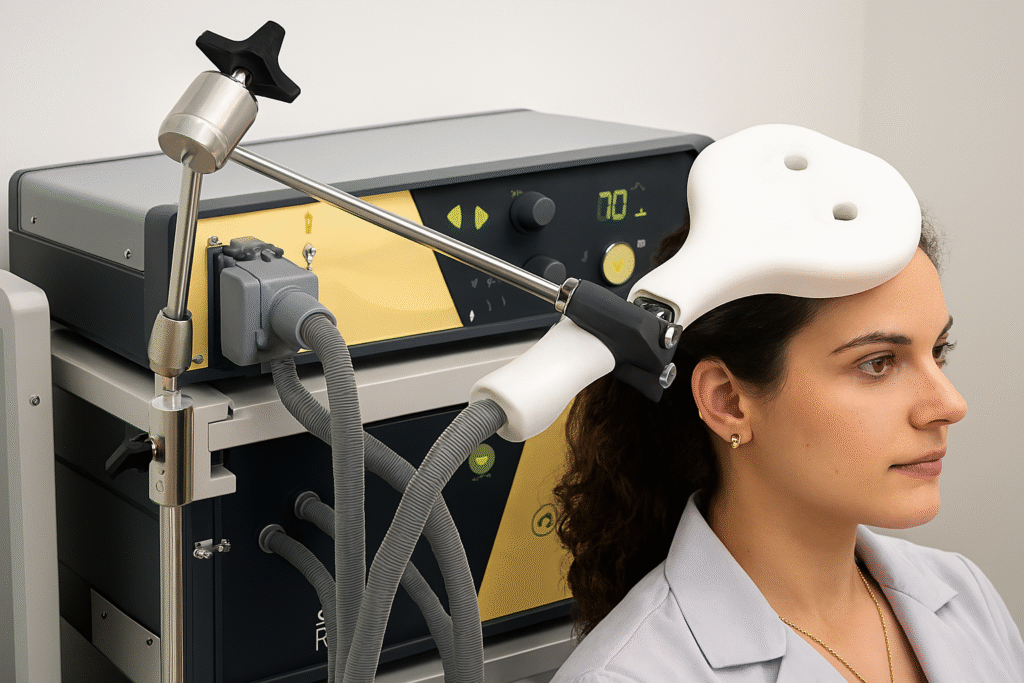
TMS is a non-invasive, evidence-based treatment that stimulates specific brain regions involved in mood regulation. It is particularly effective for patients with treatment-resistant depression, common in individuals who have suffered silently for years in the Depression in Indian Context.
Ketamine-Assisted Therapy

Ketamine offers rapid relief for severe depression and suicidal ideation. When paired with psychotherapy, it helps patients access emotional processing that was previously blocked, especially valuable for those conditioned to suppress feelings.
Integrated Care Model
By combining:
- Culturally-adapted psychotherapy
- Neurostimulation (TMS)
- Ketamine-assisted therapy
- Lifestyle and mind-body interventions
mental health treatment in India becomes not just symptom-focused, but life-aligned.
Healing Without Cultural Alienation
The future of mental health in India lies in integration, not imitation. Treating Depression in Indian Context requires:
- Seeing the body as a messenger, not a distraction
- Understanding family as context, not pathology
- Respecting tradition while applying neuroscience
- Replacing stigma with education and empathy
Depression does not mean weakness. It means the mind has been carrying more than it should, often quietly, often alone.
A Path Forward
As awareness grows, more people are seeking help, not to escape their culture, but to survive within it more healthily. They are looking for mental health treatments in India but it is necessary to ensure that they are available to people where they are, not where textbooks assume them to be.
If you or someone you love is struggling, know this: healing does not require choosing between science and culture. With the right approach, both can work together.
Because understanding the Depression in Indian Context is not just about treating illness, it’s about restoring balance, dignity, and hope.

Dr. Anuranjan Bist stands as a pioneering figure in the field of mental health, seamlessly blending traditional psychiatric methods with holistic wellness practices. With a profound understanding of the human mind and body, Dr. Bist has redefined therapeutic approaches by integrating Transcranial Magnetic Stimulation (TMS) and Ketamine therapy with ancient yoga techniques, showcasing his innovative spirit and dedication to comprehensive care.