
Ketamine Effect on Pregnancy – What Every Expecting Mother Should Know
Pregnancy is a time filled with hope, excitement, and sometimes unexpected emotional challenges. Many women experience mood changes, anxiety, or even depression during this period. With mental health awareness growing, treatments like ketamine therapy have gained attention for their rapid effects in people with severe or treatment-resistant depression. But when it comes to pregnancy, the conversation becomes more complex. Doctors, researchers, and expectant mothers often ask the same question: What is the ketamine effect on pregnancy, and is it safe?
The truth is that while ketamine has shown promising results in psychiatric care, its use during pregnancy remains controversial. Understanding the ketamine effect on pregnancy is crucial because any medication taken during this delicate stage may influence both maternal health and fetal development. Here, we’ll explore what science currently says, why most doctors avoid ketamine therapy during pregnancy, and what safer mental health treatment options may exist for expecting mothers.
What Is Ketamine Therapy and Why Is It Used in Mental Health?
Ketamine was originally developed in the 1960s as an anesthetic used in surgical procedures. Over time, researchers discovered something remarkable: in small, controlled doses, ketamine could significantly reduce symptoms of severe depression, sometimes within hours.
Unlike traditional antidepressants that primarily affect serotonin levels, ketamine works on the brain’s glutamate system, particularly the NMDA receptor. This mechanism can help restore neural connections in parts of the brain linked to mood regulation. Because of this, ketamine therapy has become an option for people with treatment-resistant depression, meaning their symptoms haven’t improved with conventional medications.
In recent years, many mental health clinics, including centers offering advanced psychiatric care, have introduced ketamine infusion therapy under strict medical supervision. While the treatment has transformed the lives of many patients, its use during pregnancy raises important safety questions. Researchers are still investigating the ketamine effect on pregnancy, and current evidence suggests that caution is necessary.
Is Ketamine Safe During Pregnancy?
When it comes to medication safety in pregnancy, doctors follow a simple principle: “first, do no harm.” Unfortunately, studying medications in pregnant women is ethically complicated. Because clinical trials could potentially harm the fetus, most drugs, including ketamine lack extensive pregnancy-specific research.
However, what we do know indicates that ketamine can cross the placenta. This means the drug can enter the fetal bloodstream after it is administered to the mother. For this reason, healthcare professionals carefully consider the ketamine effect on pregnancy before recommending the therapy.
Organizations such as the U.S. Food and Drug Administration warn that ketamine exposure during pregnancy may carry potential risks. While ketamine is sometimes used as an anesthetic during emergency medical procedures, its routine psychiatric use during pregnancy is generally discouraged unless absolutely necessary.
The lack of definitive safety data is a major reason why clinicians prefer alternative treatments whenever possible.
What Are the Possible Risks of Ketamine Exposure During Pregnancy?
Understanding the potential ketamine effect on pregnancy requires looking at both maternal and fetal health outcomes.
Effects on Fetal Brain Development
Animal studies have suggested that ketamine exposure during early brain development may influence neuronal growth and connectivity. Some experiments indicate that repeated exposure could lead to changes in learning or memory later in life. Although these findings do not automatically translate to humans, they highlight why researchers remain cautious about the ketamine effect on pregnancy.
Cardiovascular Changes
Ketamine can increase blood pressure and heart rate. During pregnancy, the cardiovascular system is already under significant stress as it adapts to support the growing fetus. Elevated blood pressure may complicate certain pregnancies, particularly for women at risk of hypertension or preeclampsia.
Limited Long-Term Research
One of the biggest concerns surrounding the ketamine effect on pregnancy is simply the lack of long-term human data. Because ketamine therapy for depression is relatively new, researchers are still studying its broader effects on reproductive health. According to a review published in the journal Frontiers in Neuroscience, more research is needed to determine the exact risks of prenatal ketamine exposure and its impact on fetal neurodevelopment.
What Is the Perinatal Perspective on Mental Health Before and After Birth
The term perinatal refers to the period during pregnancy and shortly after childbirth. Mental health challenges during this time are surprisingly common. Because ketamine has shown promise in treating severe depression, researchers have begun exploring its potential role in postpartum depression treatment. Some small clinical studies have suggested that ketamine administered after delivery may reduce depressive symptoms in certain cases.
However, these findings do not necessarily support its use during pregnancy itself. Scientists continue studying the ketamine effect on pregnancy to better understand whether the benefits might ever outweigh the risks in specific medical situations.
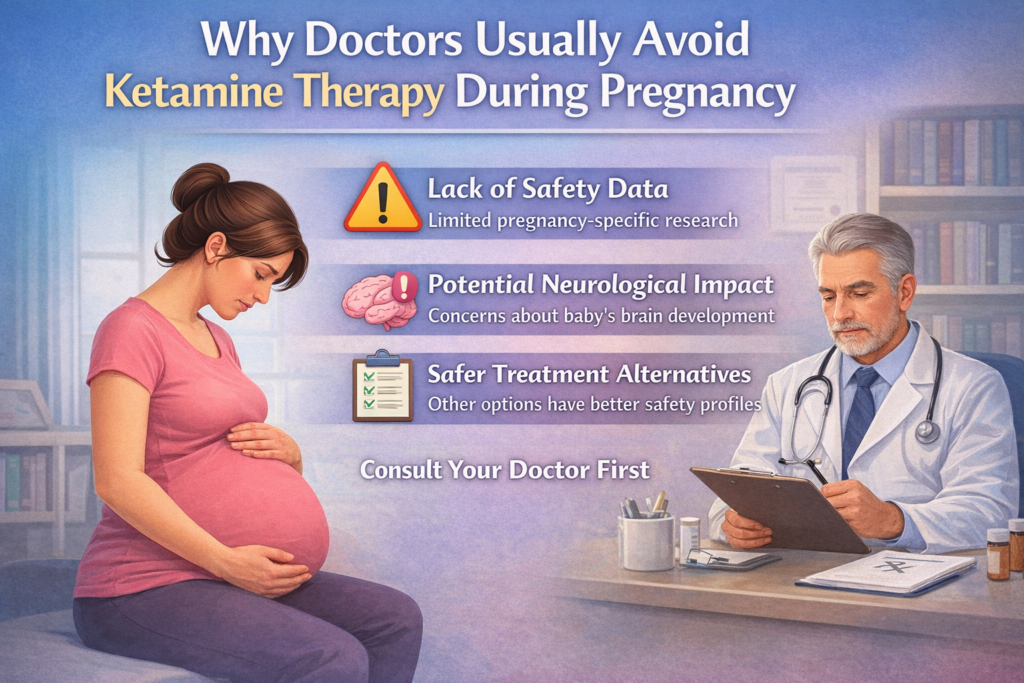
Why Doctors Usually Avoid Ketamine Therapy During Pregnancy
Most mental health professionals take a conservative approach when treating pregnant patients. There are several reasons why the ketamine effect on pregnancy remains a concern in clinical practice.
- Lack of Comprehensive Safety Data: Without large-scale human studies, doctors cannot confidently guarantee that ketamine therapy poses no risk to fetal development.
- Potential Neurological Impact: Because ketamine influences brain chemistry and neural connectivity, researchers worry about how prenatal exposure might affect the developing brain.
- Availability of Safer Alternatives: Another key reason doctors avoid ketamine therapy during pregnancy is that other treatment options with better safety profiles are available.
In short, until science provides stronger evidence, most healthcare providers prefer treatments that have already been studied extensively in pregnant populations.
What Are Safer Mental Health Treatments During Pregnancy
Fortunately, women experiencing depression or anxiety during pregnancy still have several effective treatment options. Understanding the ketamine effect on pregnancy helps clinicians choose therapies that balance effectiveness with safety.
Psychotherapy
Therapies such as Cognitive Behavioral Therapy (CBT) and interpersonal therapy have been shown to significantly improve perinatal depression. These treatments are completely medication-free and widely recommended as a first-line approach.
Lifestyle and Support Interventions
Regular physical activity, adequate sleep, and strong social support networks can also play a powerful role in emotional well-being during pregnancy.
Pregnancy-Compatible Medications
Some antidepressants have been studied extensively in pregnant populations and may be prescribed when the benefits outweigh potential risks.
Non-Medication Therapies
Innovative treatments such as Transcranial Magnetic Stimulation (TMS) are gaining attention because they do not involve systemic medication exposure. TMS uses magnetic pulses to stimulate specific areas of the brain linked to mood regulation.
Clinics specializing in advanced mental health care often evaluate each patient individually to determine the safest approach during pregnancy.
When Should Pregnant Women Seek Mental Health Support?
Pregnancy is a time of immense physical, emotional, and hormonal changes. It’s important to remember that experiencing emotional struggles during this period is not a personal failure, it’s a natural response to life’s adjustments and physical stress.
If you notice persistent sadness, anxiety, sleep disturbances, or feelings of hopelessness, it’s essential to seek support from a qualified mental health professional. Early intervention can make a meaningful difference for both mother and baby.
At the Mind Brain Institute, our team of experienced clinicians provides compassionate, evidence-based care tailored for expectant mothers. We work closely with you to identify challenges early, offer therapy options, and support emotional well-being throughout pregnancy, helping ensure a healthier and more positive experience for both mother and child.
Remember, reaching out is a sign of strength, and support is always available.

Dr. Anuranjan Bist stands as a pioneering figure in the field of mental health, seamlessly blending traditional psychiatric methods with holistic wellness practices. With a profound understanding of the human mind and body, Dr. Bist has redefined therapeutic approaches by integrating Transcranial Magnetic Stimulation (TMS) and Ketamine therapy with ancient yoga techniques, showcasing his innovative spirit and dedication to comprehensive care.