For decades, the idea of a doctor prescribing a mind-altering mushroom compound to a trauma survivor or a deeply depressed patient would have seemed like the stuff of science fiction or a counterculture fantasy. Today, it is rapidly becoming a clinical reality.
The past few years have ushered in what researchers are calling a “psychedelic renaissance,” and psilocybin, the naturally occurring compound found in “magic mushrooms,” is at the center of it. Three of America’s most prestigious medical institutions, Johns Hopkins University, New York University (NYU) Langone, and the University of California, San Francisco (UCSF), are leading a wave of rigorous clinical trials. Among the most urgent and exciting areas of inquiry: psilocybin therapy for PTSD and psilocybin treatment for MDD. The findings so far are stunning, cautiously optimistic, and potentially paradigm-shifting.
Why Now? The Problem with Existing Mental Health Treatments
Before diving into the labs, it’s worth asking: why are neuroscientists turning to psychedelics in the first place?
The answer is stark. PTSD affects an estimated 13 million Americans every year, and conventional therapies – SSRIs, prolonged exposure therapy, and cognitive processing therapy- leave a substantial portion of patients with persistent, debilitating symptoms. Dropout rates from trauma-focused psychotherapies are notoriously high, and many survivors of trauma cycle through years of treatment with only partial relief. This is precisely why the emerging science of psilocybin therapy for PTSD has generated such intense clinical interest: it offers a fundamentally different mechanism of action, one that may succeed where conventional approaches fall short.
Meanwhile, major depressive disorder (MDD) remains one of the leading causes of disability globally. Roughly one in three patients with MDD fail to respond to two or more standard pharmacological treatments, landing them in the grim category of treatment-resistant depression (TRD). The mental health system, in short, has a gap, and psilocybin may be one of the most promising tools to fill it.
Johns Hopkins: At the Frontier of Psilocybin Therapy for PTSD
Johns Hopkins has perhaps the longest and most celebrated legacy of psilocybin research in the country. Its Center for Psychedelic and Consciousness Research was one of the first scientific groups to restart serious psychedelic research after a decades-long moratorium. And now it is turning that legacy toward one of mental health’s most stubborn conditions.
A landmark active trial at Johns Hopkins, formally titled the PAM-VET study (NCT06989957) is currently recruiting military veterans diagnosed with PTSD for at least six months. This randomized, double-blind, Phase 1 study represents a bold new approach to psilocybin therapy for PTSD: it investigates the safety and effectiveness of co-administered MDMA and psilocybin in this population. In the protocol, MDMA is given first, followed by psilocybin 30 minutes later, a sequencing designed to synergize the empathy-enhancing effects of MDMA with psilocybin’s capacity for deep introspection and ego dissolution. Separately, another Johns Hopkins trial (NCT06407635) is specifically designed to evaluate psilocybin therapy for PTSD in adults who are currently taking serotonin reuptake inhibitors (SSRIs or SNRIs), a population historically excluded from psychedelic research due to drug interaction concerns. This open-label, controlled study tests whether psilocybin is feasible and safe alongside existing antidepressants, and whether it can meaningfully reduce PTSD symptoms while enhancing well-being and quality of life.
The implications are enormous. Millions of people with PTSD are currently on SSRIs. If psilocybin proves safe and effective alongside these medications, the treatment universe expands dramatically.
NYU Langone: Where Science Meets the Human Story
New York University’s Center for Psychedelic Medicine is another powerhouse in this space, and its approach is distinctive for its breadth and emphasis on the therapeutic relationship.
NYU researchers have long been probing psilocybin’s potential across a range of conditions, from addiction to cancer-related distress, but their work on psilocybin treatment for MDD is particularly groundbreaking. NYU’s Center is currently running a Phase II randomized, double-blind, placebo-controlled trial evaluating a single 25mg oral dose of psilocybin (versus placebo) in adults with major depressive disorder, assessing changes in depressive symptoms from baseline to Day 43 post-dose. The primary measure is the MADRS (Montgomery-Åsberg Depression Rating Scale), one of psychiatry’s gold-standard instruments for quantifying depression severity.
NYU researchers are also actively studying psilocybin therapy for PTSD as part of their broader portfolio. The center’s scientists are probing psilocybin’s efficacy across psychiatric disorders, including post-traumatic stress disorder, building on a celebrated history that includes Dr. Stephen Ross’s landmark 2016 finding: a single psilocybin dose brought lasting relief from distress to 80% of terminally ill cancer patients for more than six months, an early and powerful signal of the compound’s remarkable durability.
Published research from the NYU ecosystem has also begun to illuminate how psilocybin works. A 2024 study in Scientific Reports by researchers from NYU’s Psychedelic Medicine Research Training Program found that improvements in psychological flexibility, the ability to step back from rigid thought patterns and engage with experience openly, may be a central mechanism underlying psilocybin’s antidepressant effects. Participants with moderate-to-severe MDD showed measurable gains in flexibility, mindfulness, and values-congruent living after psilocybin-assisted therapy incorporating Acceptance and Commitment Therapy (ACT) principles.
UCSF: Expanding the Frontier, One Condition at a Time
The University of California, San Francisco’s Translational Psychedelic Research (TrPR) Program is rapidly becoming one of the most active and diverse psilocybin research hubs in the country. UCSF’s portfolio spans anorexia nervosa, Parkinson’s disease-related depression, chronic pain, and demoralization in palliative care, but PTSD and depression remain at the core.
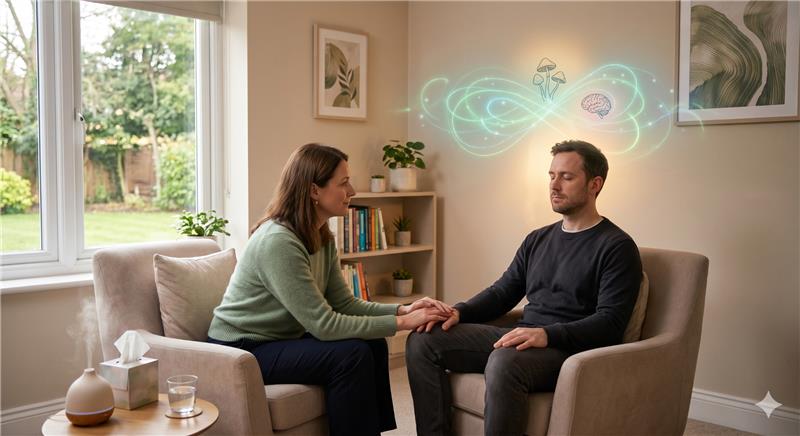
A Phase 2 randomized study led by renowned psychedelic researchers is now underway at UCSF, directly investigating how the context of psilocybin therapy for PTSD and related conditions shapes outcomes. The trial, which began in October 2024 and runs through November 2028, aims to enroll 120 participants, making it one of the largest psilocybin context studies to date. It examines how the setting of psilocybin administration, the therapeutic environment, the support structure, and the relationship between patient and guide interact with the drug’s effects. This gets at one of the most philosophically fascinating aspects of psilocybin research: the substance doesn’t work in a vacuum. The “set and setting” may be as therapeutically important as the molecule itself.
UCSF is also running a Phase 2 study on psilocybin for depression in Bipolar II Disorder, a population where conventional antidepressants carry significant risks of triggering mania, and a pioneering palliative care trial comparing single-dose oral psilocybin against ketamine in patients near the end of life experiencing demoralization. These trials reflect a vision of psilocybin not as a niche curiosity, but as a versatile neurotherapeutic with wide-ranging applications.
The Road Ahead: Promise, Caution, and Access
Despite the excitement, leading researchers are emphatic that psilocybin is not a magic bullet. A 2025 consensus statement from the US National Network of Depression Centers stresses the need for further research into optimal dosing, long-term safety, and effectiveness across diverse populations before psilocybin therapy for PTSD or depression can be integrated into routine clinical care. Questions about who is most likely to benefit and who might be at risk remain open and important.
Psilocybin remains a Schedule I substance federally in the US, though Oregon and Colorado have moved toward regulated access, and countries like Australia have already granted early compassionate-use approvals. Regulatory momentum is building: the FDA has granted breakthrough therapy designations to psilocybin compounds for both treatment-resistant depression and MDD, and over 36 psychedelic-related policy bills were introduced across US states in 2025 alone. The clinical and legislative landscapes are shifting together.
A New Chapter in Mental Health and What It Means for You
For millions living with PTSD and treatment-resistant depression, these advances represent renewed hope grounded in science. While psilocybin therapy for PTSD is still under research, it reflects a broader shift toward deeper, brain-based healing rather than just symptom management.
At the same time, effective mental health care today does not rely on a single breakthrough. It is increasingly built on integrated, personalized approaches that support how the brain regulates stress, emotions, and overall functioning.
At Mind Brain Institute, the focus is on combining neuroscience with holistic care. Through evidence-based treatments like TMS and Ketamine Assisted Therapy, the goal is to restore balance in brain function and support long-term mental well-being in a structured, non-invasive way.
As research evolves, the direction is clear – mental health treatment is becoming more advanced, more personalized, and more aligned with how the brain truly works.
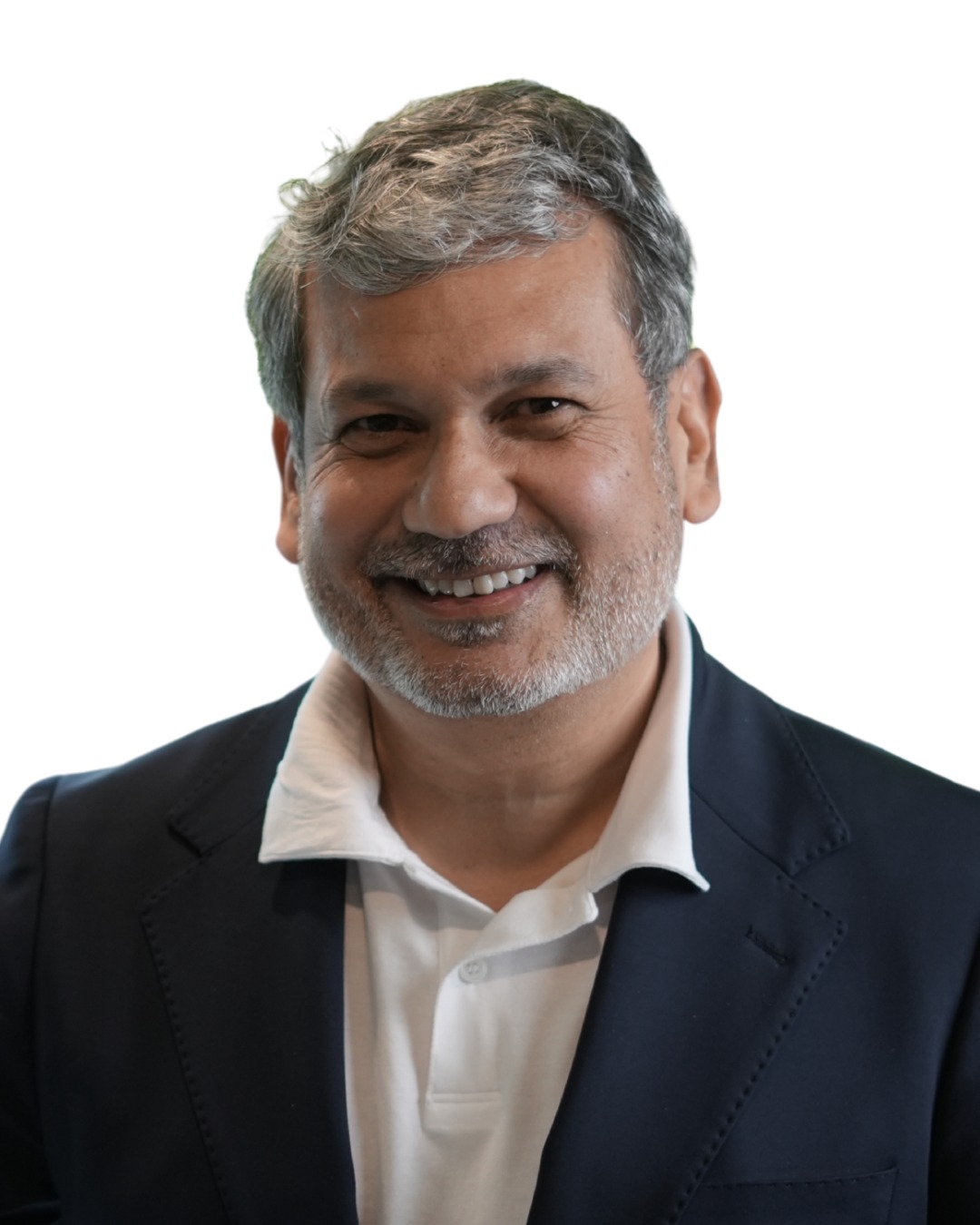
Dr. Anuranjan Bist stands as a pioneering figure in the field of mental health, seamlessly blending traditional psychiatric methods with holistic wellness practices. With a profound understanding of the human mind and body, Dr. Bist has redefined therapeutic approaches by integrating Transcranial Magnetic Stimulation (TMS) and Ketamine therapy with ancient yoga techniques, showcasing his innovative spirit and dedication to comprehensive care.