Comparing ACC and DLPFC Neural Targets for TMS Therapy for OCD
If you have ever lived with the relentless “stuckness” of Obsessive-Compulsive Disorder, you know it isn’t just about being tidy or double-checking the stove. It is a biological glitch – a loop in the brain’s wiring that refuses to reset. For years, the gold standard of treatment involved a combination of SSRIs and Exposure and Response Prevention (ERP). But for nearly 40% of patients, those traditional paths lead to a dead end.
This is where Transcranial Magnetic Stimulation (TMS) enters the frame. It is a non-invasive, drug-free alternative that uses magnetic pulses to “re-tune” the brain’s circuitry. However, as the field of neuromodulation has evolved, a critical question has emerged for patients and practitioners alike: Where exactly should we point the magnet?
In the world of TMS therapy for OCD, two specific brain regions take center stage: the Anterior Cingulate Cortex (ACC) and the Dorsolateral Prefrontal Cortex (DLPFC). Choosing between them isn’t just a technicality; it’s a strategic decision based on clinical evidence and individual symptoms. Let’s dive deep into the science, the outcomes, and what this means for your recovery journey.
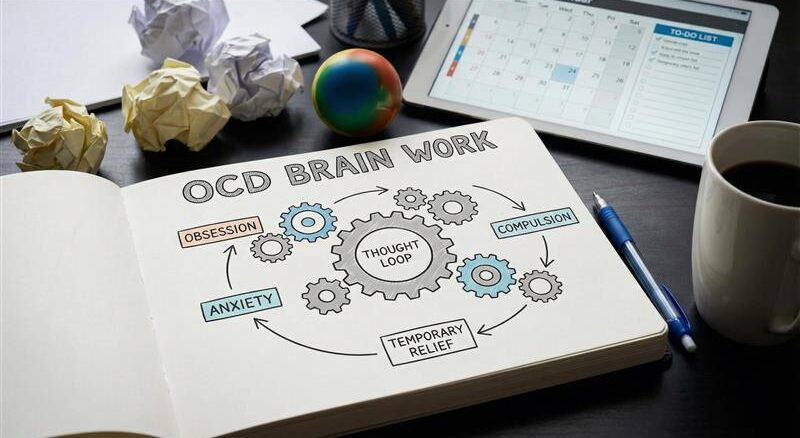
How Does the OCD Brain Work?
To understand why we target the ACC or the DLPFC, we first have to look at the “broken circuit” behind OCD. Neuroscientists call this the CSTC (Cortico-Striato-Thalamo-Cortical) circuit. Think of it like a washing machine that is stuck on the spin cycle. The brain identifies a “mistake” or a “threat,” but the signal that says “all clear” never fires.
- The DLPFC is the executive center. It handles cognitive control, planning, and switching your attention from one thing to another.
- The ACC is the error-detection hub. It monitors conflict and tells you when something is wrong. In OCD, the ACC is often hyperactive, screaming that there is an “error” even when everything is fine.
By applying TMS treatment for OCD to these areas, we aren’t just numbing the brain; we are practicing “neural coaching,” encouraging these regions to return to a healthy rhythm.
What is the Role of the DLPFC in Treatment?
The Dorsolateral Prefrontal Cortex was the original “darling” of TMS. Because it sits relatively close to the surface of the skull, it is easy to reach with a standard Figure-8 magnetic coil.
Why Target the DLPFC?
The logic here is top-down control. If we can strengthen the executive function of the DLPFC, the patient becomes better at “vetoing” the intrusive thoughts generated by the deeper parts of the brain. It’s like hiring a more disciplined security guard for your mind.
The Clinical Reality
While DLPFC targeting is incredibly effective for depression, the results for OCD have historically been mixed. Studies often show a reduction in symptoms, but the “response rate” – the percentage of people who see a 35% or greater reduction in their Y-BOCS scores – tends to be lower than newer methods. However, for patients who struggle with the “cognitive” side of OCD (ruminations and planning), the DLPFC remains a vital target.
Why is the ACC a Major Breakthrough for Relief?
In 2018, the landscape of TMS therapy for OCD changed forever when the FDA cleared a new protocol specifically targeting the Anterior Cingulate Cortex and the medial Prefrontal Cortex.
The challenge? The ACC is buried deep within the brain’s midline. A standard coil can’t reach it without using so much power that it would cause discomfort. To solve this, engineers developed the H-Coil, often referred to as “Deep TMS.”
Why the ACC is a Game-Changer
The ACC is the heart of the “error signal.” When we target this area, we are going straight to the source of the distress. Deep TMS doesn’t just ask the brain to ignore the obsession; it helps quiet the obsession at its point of origin.
According to a landmark multi-center study published in the American Journal of Psychiatry, patients receiving Deep TMS targeting the ACC saw significantly higher response rates compared to sham treatments. Specifically, data showed that over 38% of treatment-resistant patients achieved a full response, with many continuing to improve even after the sessions ended.
Does the ACC or DLPFC Offer Better Clinical Results?
If we look at the raw data, the ACC (Deep TMS) currently holds the edge for OCD-specific outcomes.
| Feature | DLPFC Targeting | ACC Targeting (Deep TMS) |
| Coil Type | Figure-8 (Surface) | H-Coil (Deep) |
| FDA Status | Off-label (usually) | FDA Cleared for OCD |
| Depth | ~1.5 cm | ~3.0 cm |
| Primary Benefit | Cognitive control/Inhibition | Error signal reduction/Distress relief |
| Clinical Success | Moderate/Variable | High (38% + Response Rate) |
However, “winning” is subjective. Some clinics are now experimenting with multi-target protocols. They might stimulate the DLPFC to help with the “willpower” to stop compulsions, while simultaneously targeting the ACC to lower the “anxiety volume.”
What is Symptom Provocation and Why Does It Matter?
One of the most fascinating (and slightly intimidating) aspects of modern TMS treatment for OCD, particularly when targeting the ACC is the “Symptom Provocation.”
Unlike TMS for depression, where you might just sit and watch Netflix, OCD TMS often requires the patient to briefly lean into their obsession right before the pulses start. If your OCD is about germs, the clinician might have you hold a “dirty” item. This “activates” the ACC circuit, making it more plastic and receptive to the magnetic pulses. It is a perfect example of how human psychology and cold, hard physics work together to create healing.
Is TMS Therapy for OCD Right for You?
Choosing a neural target is a conversation you should have with a specialized provider. Generally, you might be a prime candidate for these advanced protocols if:
- You have tried at least two different SSRIs without success.
- You have engaged in ERP therapy but felt “stuck.”
- Your OCD symptoms are significantly interfering with your ability to work or maintain relationships.
It is important to remember that TMS is not a “magic wand.” It is a tool that opens a window of neuroplasticity. When you combine TMS therapy for OCD with ongoing therapy, the results are often synergistic, the TMS makes the brain “teachable” again.
Overall…
The shift from DLPFC to ACC targeting represents a beautiful evolution in psychiatric medicine. It shows that we are moving away from a “one-size-fits-all” approach to a more nuanced, “mapping-based” understanding of the human mind.
Whether you choose the executive control of the DLPFC or the deep error-correction of the ACC, the fact remains: your brain is capable of change. You are not your intrusive thoughts, and you are certainly not “broken” beyond repair. You are simply dealing with a circuit that needs a precise, magnetic nudge to find its balance again.
By staying informed about these clinical outcomes, you are already taking the first step toward reclaiming your life from OCD. You aren’t just a patient; you are an informed advocate for your own mental health.
At the Mind Brain Institute, we specialize in advanced neuromodulation protocols that target the root of your symptoms to help you regain control. Contact us today to discover how our personalized TMS treatments can pave your unique path toward lasting recovery.

Dr. Anuranjan Bist stands as a pioneering figure in the field of mental health, seamlessly blending traditional psychiatric methods with holistic wellness practices. With a profound understanding of the human mind and body, Dr. Bist has redefined therapeutic approaches by integrating Transcranial Magnetic Stimulation (TMS) and Ketamine therapy with ancient yoga techniques, showcasing his innovative spirit and dedication to comprehensive care.