Understanding Treatment for OCD through the Orbitofrontal-Striatal-Thalamic Circuit
Have you ever felt like your brain has a “sticky” thought? For most people, a passing worry about a locked door or a clean countertop is a fleeting blip – a minor static noise that fades as quickly as it appeared. But for millions living with Obsessive-Compulsive Disorder (OCD), that blip transforms into a high-speed, high-voltage loop that refuses to break. It isn’t just a “worry”; it is a physiological trap.
If you’ve ever felt frustrated because “just stopping it” seems impossible, there is a profound scientific reason for that. The struggle isn’t a lack of willpower; it’s a matter of neurobiology. To truly understand the most effective treatment for OCD, we have to look under the hood at a complex network known as the Orbitofrontal-Striatal-Thalamic circuit (often called the CSTC circuit).
At the Mind Brain Institute, we believe that when you understand the “why” behind the “what,” the path to recovery becomes clearer. Today, we’re going on a comprehensive deep-dive into this “worry circuit” to see how modern science is learning to “reset” the brain.
What Exactly Is the Orbitofrontal-Striatal-Thalamic Circuit?
To understand how the brain generates an obsession, imagine your mind as a busy international airport. For the airport to run smoothly, you need a high-functioning Air Traffic Control tower to decide which planes land, which take off, and which stay in a holding pattern.
In the OCD brain, the Orbitofrontal-Striatal-Thalamic circuit is that control tower, but the “gates” are stuck in the open position. This circuit involves three primary anatomical players that work in a continuous loop:
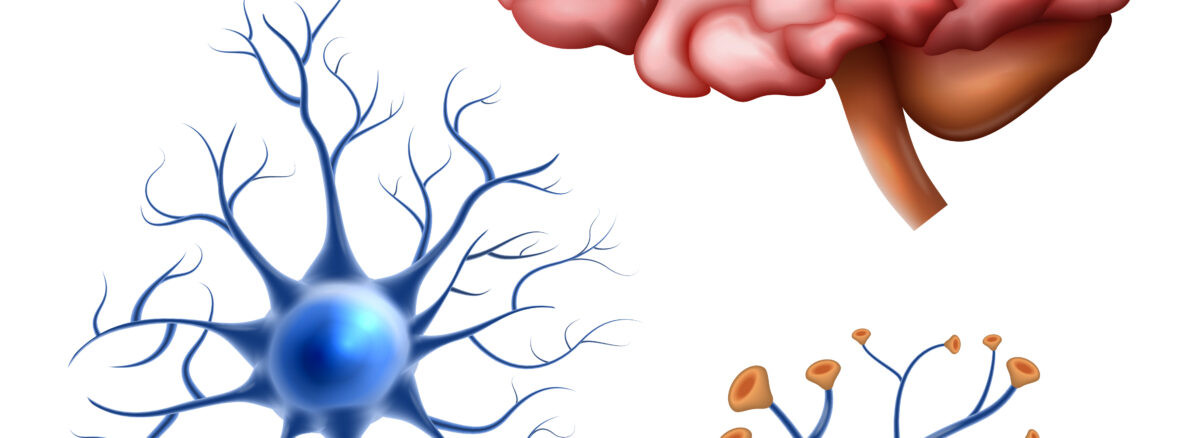
- The Orbitofrontal Cortex (OFC): Located right behind your eyes, the OFC is the part of your brain responsible for social behavior, decision-making, and crucially – error detection. In a person with OCD, the OFC is often hyperactive. It is the part of the brain that screams, “Something is wrong! The stove is on! The germs are spreading!”
- The Striatum (specifically the Caudate Nucleus): This is the “gatekeeper.” In a neurotypical brain, the striatum filters the thousands of intrusive thoughts we have daily, allowing only the important ones to pass through. In the OCD brain, the gatekeeper is effectively off-duty, allowing “error signals” to flood the system unchecked.
- The Thalamus: This is the relay station. It takes the signals from the lower brain and sends them back up to the cortex to drive physical action or further thought.
When these three don’t communicate correctly, you get a self-perpetuating feedback loop. The OFC detects an error, the Striatum fails to filter the alarm, and the Thalamus relays the message back to the OFC, reinforcing the obsession. This “looping” is the biological signature of the disorder.
Why Does This Biological Loop Make Treatment for OCD So Necessary?
A common question patients ask is: “If I know the thought is irrational, why can’t I just ignore it?” The answer lies in the metabolic intensity of the circuit.
Research using functional MRI (fMRI) scans, such as those documented by the NIH, consistently shows that when someone with OCD is triggered, the metabolic activity in their OFC spikes significantly higher than in a neurotypical brain.
When your “worry circuit” is stuck in the “on” position, the feeling of dread is as chemically real as a physical fire alarm. You wouldn’t tell someone to “ignore” a blaring siren in a smoke-filled room; your brain is hardwired to respond to it. This is why professional treatment for OCD is not just about “talking through” feelings, it is about physiologically calming a hyperactive alarm system. Without targeted intervention, the circuit effectively “trains” itself to stay stuck, making the obsessions feel more valid over time.
How Does Exposure Therapy Change the Brain’s Circuitry?
If the circuit is the problem, how do we physically alter it? The gold standard of therapy for OCD is Exposure and Response Prevention (ERP). While it may sound like a simple behavioral exercise, ERP is actually a profound form of “biological engineering.”
ERP works through a process called habituation. By intentionally exposing a patient to a trigger (the obsession) and strictly preventing the ritual (the compulsion), we are forcing the brain to sit with the “error signal” without acting on it.
What happens in the circuit during ERP?
- The OFC sends the alarm.
- The Striatum is “re-trained” to filter the signal because no “relief” (the compulsion) is provided.
- The Thalamus eventually stops receiving the urgent relay.
Over several weeks, this neuroplasticity actually changes the physical structure of the brain. Studies published in Frontiers have shown that successful ERP results in a measurable decrease in the hyperactivity of the OFC and the Caudate Nucleus. You are quite literally rewiring your “worry circuit” from the top down.
Which Neurotransmitters Fuel This Malfunctioning Circuit?
While the anatomy (the “hardware”) of the circuit is vital, we cannot ignore the “software” – the neurotransmitters. The communication between the OFC and the Striatum relies heavily on the balance of two specific chemicals: Glutamate and Serotonin.
Glutamate (The Gas Pedal): Glutamate is an excitatory neurotransmitter. In many OCD brains, there is an overabundance of glutamate within the CSTC circuit. This keeps the engine revving at high RPMs, making the “error signals” feel louder and more urgent.
Serotonin (The Brake Pedal): Serotonin is inhibitory. It helps regulate the flow of information. This is why the first line of pharmacological treatment for OCD often involves Selective Serotonin Reuptake Inhibitors (SSRIs). By increasing serotonin, we are essentially strengthening the “brakes” on the circuit, allowing the patient enough mental space to engage in therapy for OCD.
At the Mind Brain Institute, we look at this chemical balance as part of a holistic recovery plan. Medication isn’t a “crutch” – it’s a tool to stabilize the circuit so that behavioral therapy can take root.
Can TMS Provide a Non-Invasive Reset for the Circuit?
One of the most exciting advancements in recent years is the use of Transcranial Magnetic Stimulation (TMS). If medication is a chemical approach and ERP is a behavioral approach, TMS is an electromagnetic approach.
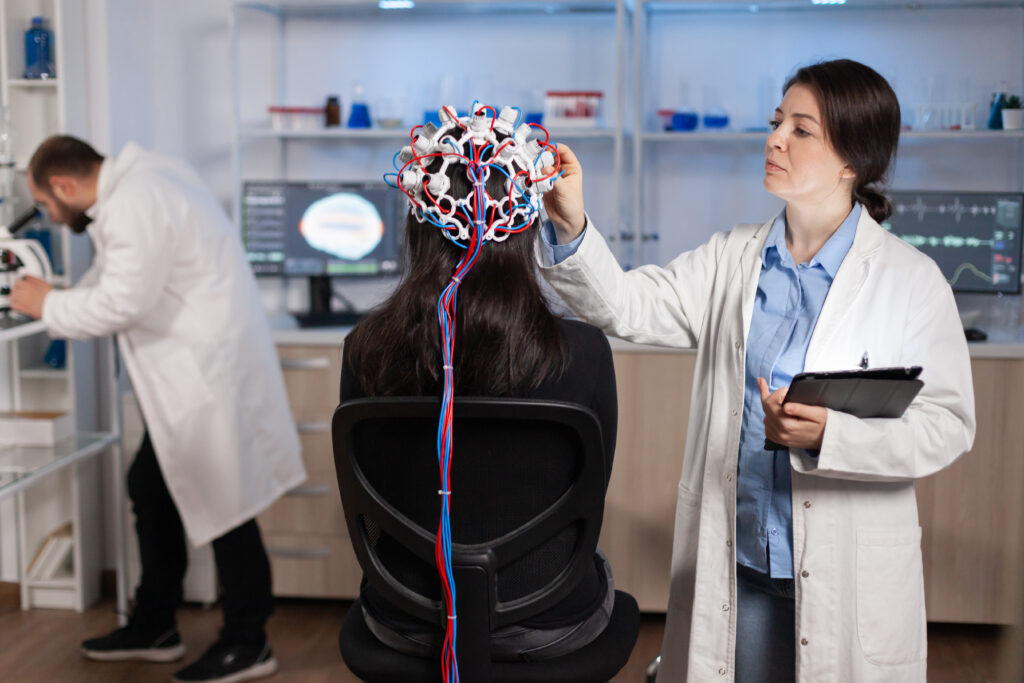
TMS uses magnetic pulses to induce a small electric current in specific areas of the brain, specifically the Anterior Cingulate Cortex (ACC) and the Orbitofrontal Cortex (OFC). Unlike surgery, this is entirely non-invasive. The patient sits in a chair while a magnetic coil is placed against their scalp.
By targeting these deep structures, TMS helps “down-regulate” the hyperactive error signals. It’s like turning down the volume on a radio that’s been screaming at max capacity. For many patients who haven’t found relief through medication alone, TMS serves as a powerful “circuit breaker” that makes other forms of treatment for OCD much more effective.
Is Deep Brain Stimulation Therapy the Future of Treatment for OCD?
For some individuals, the “sticky” loop is so deeply ingrained that standard therapy and medication don’t provide sufficient relief. This is known as treatment-resistant OCD. For these patients, Deep Brain Stimulation therapy (DBS) offers a revolutionary bridge to recovery.
DBS involves the surgical implantation of tiny electrodes into specific hubs of the CSTC circuit, most commonly the ventral striatum or the internal capsule. These electrodes are connected to a device similar to a pacemaker, which sits under the skin of the chest.
How does DBS “reset” the circuit?
It’s helpful to think of DBS as “noise-canceling headphones” for the brain. The electrodes deliver constant, high-frequency electrical pulses that disrupt the pathological signaling between the Striatum and the OFC.
- It breaks the “rhythm” of the obsession.
- It reduces the metabolic “heat” in the OFC.
- It makes the brain more “plastic,” or open to the benefits of traditional therapy for OCD.
According to the research,DBS has shown significant success in reducing symptom severity by 40% to 60% in chronic cases, often allowing people who were previously disabled by their symptoms to return to work and social life.
Why Is a Multimodal Approach the Most Effective Treatment for OCD?
No single tool is a magic bullet. Because OCD is a “circuit-based” disorder, the most effective recovery plans are “multimodal.” This means attacking the problem from several angles at once:
- Biological (Medication/TMS/DBS): Stabilizing the chemical and electrical signals in the CSTC loop.
- Behavioral (ERP): Training the striatum to filter intrusive thoughts and re-closing the “gate.”
- Psychological: Addressing the anxiety, depression, and “co-pilot” symptoms that often exacerbate the circuit’s distress.
By integrating these methods, we aren’t just treating symptoms; we are rehabilitating the brain’s internal communication system. This comprehensive strategy is what leads to long-term, sustainable remission and helps the brain return to a state of healthy homeostasis.
Are You Ready to Break the Loop?
Living with OCD can feel like being a prisoner within your own mind, but the science is clear: your brain is a dynamic, changing organ. You aren’t “broken”; your “worry circuit” is simply overactive.
From the behavioral rewiring of ERP to the advanced medical intervention of Deep Brain Stimulation therapy, we now have the keys to unlock the “sticky” gates of the CSTC circuit. Understanding the neurobiology of your condition is the first step in stripping away the shame and replacing it with a strategic plan for health.
At the Mind Brain Institute, we specialize in these advanced, neurobiologically-informed approaches. We don’t just see the disorder; we see the person and the complex brain circuitry behind it. If you or a loved one are ready to move beyond the loop, we are here to guide you through the latest, most effective treatment for OCD.
Contact us today to learn how we can help you quiet the noise and reclaim your life.
Dr. Anuranjan Bist stands as a pioneering figure in the field of mental health, seamlessly blending traditional psychiatric methods with holistic wellness practices. With a profound understanding of the human mind and body, Dr. Bist has redefined therapeutic approaches by integrating Transcranial Magnetic Stimulation (TMS) and Ketamine therapy with ancient yoga techniques, showcasing his innovative spirit and dedication to comprehensive care.