




How many times in the past have you assured yourself that the next day, ‘I will go to bed early,’ yet find yourself awake, either scrolling through your phone, replaying your day’s thoughts, or working on something that was left unfinished? Sleep is the first thing that people tend to forego in a world that does not stop. But at least it is what our mind most requires.
Sleep is not merely a form of resting your body, but it is also the time when your brain heals, puts together feelings, and reinstates order. As reported by the World Economic Forum, about 62 percent of the world does not sleep well, thus having mood swings, lack of concentration, and emotional exhaustion. Here, sleep hygiene comes into play, the same habits that make you sleep more and think clearly. Since good sleep hygiene is not a luxury, it is a mental health necessity – it is a self-care practice of your brain, your mood, and your health in general on a daily basis.
Science of Sleep and Mental Health
It is not merely the state of rest; sleep is the process of restoring and balancing your brain. The brain in a deep sleep gets rid of the metabolic waste, restores neural connections, and consolidates memories. The processing and storing of emotional experiences occur during the REM state and help you to wake up in a more stable and adjusted state.
This is a fine balance that is destroyed when sleep hygiene is disrupted. The neurotransmitters in the brain – serotonin, dopamine, and GABA lose rhythm, which makes people irritated, anxious, and low-mood. According to studies conducted by the National Institutes of Health (NIH), sleep deprivation lowers emotional control and predisposes individuals to depression and anxiety by significantly.
The connection between sleep and mental health is two-sided. The lack of sleep aggravates mental health issues, whereas the presence of mental health problems complicates obtaining good sleep. That is why the ability to optimize sleep hygiene is one of the most useful, natural methods of stabilizing emotions, optimizing thinking, and maintaining mental health in the long term.
Common Causes of Poor Sleep Hygiene
It is not necessarily the stress that keeps us awake. Most of the time, bad sleeping habits creep into our lives without us realizing it. The following are the most prevalent offenders:
- Abnormal sleep patterns: Sleeping and waking up at unsimilar hours mess up the internal clock of your body.
- Screen time at night: Anything on a device has blue light that inhibits melatonin, which postpones sleep.
- Caffeine and nicotine: They are both stimulants that stay in your system for hours.
- Overthinking/ worrying too much: The hyperactive mind is not ready to rest, and it is in attention mode, the nervous system.
- Environmental: Noise, excessive lights, or bad bedding will disrupt the quality of sleep.
The first step is awareness to improve your sleep hygiene because you need to define these habits and gradually replace them with those that can make your body and brain align with the natural rest periods.
How Poor Sleep Impacts Mood and Cognitive Health
When have you ever woken up after a restless night, feeling irritable, forgetting things, or being clueless? That is your brain crying out in pain. Sleep hygiene disruption interferes with the neurotransmitters in the brain, serotonin and dopamine, which are the immediate cause of mood, motivation, and attention.
Reduced quality of sleep leads to an increase in cortisol (the stress hormone). This causes emotional responsiveness, anxiety, and reduced resilience to daily stressors. In the long run, persistent insufficient rest may even change the structure of the brain parts that deal with memory and emotional control.
Sleep is not a passive behavior; it is an active reset button to the mind. In its absence, even the most powerful brains begin to come apart due to exhaustion and stress.
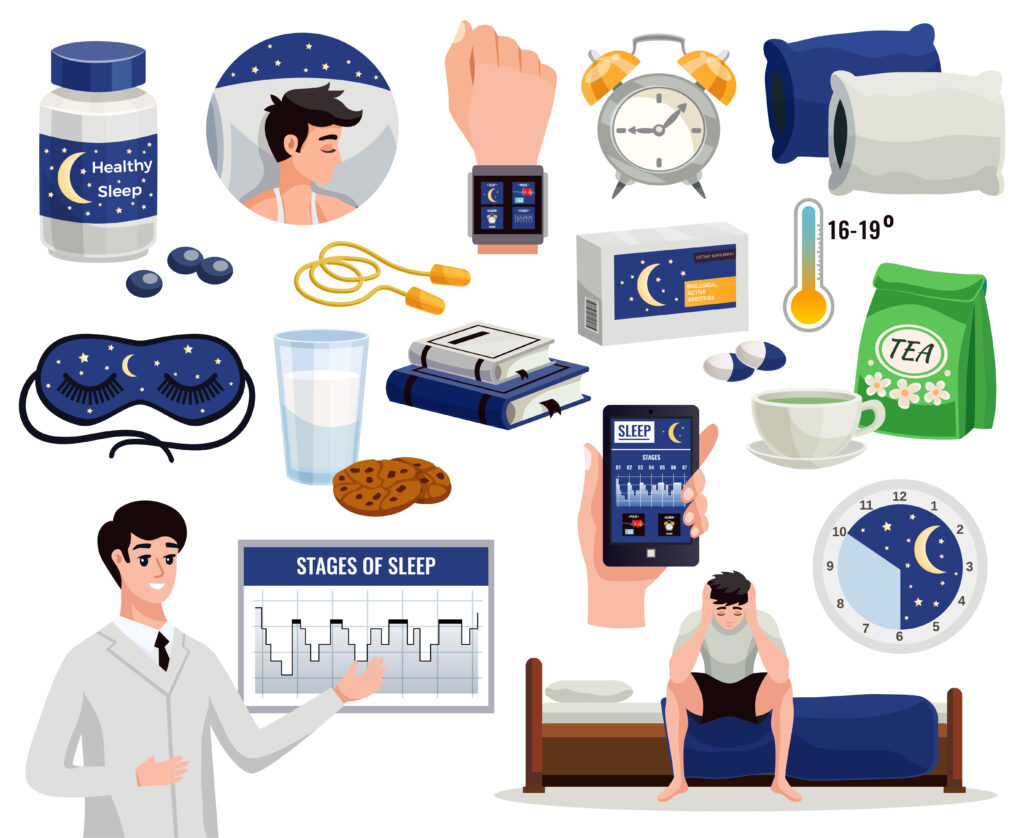
Building Better Sleep Hygiene: Practical Strategies
Good sleep hygiene does not require a pill; it requires effective and regular practices of the mind that prepare your body and mind to rest. Here is how you can start:
Keep a regular Sleeping Schedule
Always sleep and wake up at the same time daily, including weekends. This enhances the circadian rhythm of your body, which is your internal clock, and it is the one that determines sleep and wake. Over time, your body would be normalized to have sleep at specific times, and this increases the quality of sleep and the sleep duration.
Create a Wind-Down Routine
Sleep hygiene commences an hour before sleep. Switch the lights off, set your phone aside, and substitute the screens with relaxing practices – reading, stretching, or journaling. Deep breathing and meditation decrease the heart rate and inform your brain that it is time to relax.
Design a Sleep-Friendly Space
Your bedroom must be a kind of refuge. Cool (18-20 degrees Celsius) in darkness and quiet. Buy blackout curtains and a comfortable bed. Even such simple changes as setting your phone aside will probably alter your state of mind and sleep considerably.
Watch What You Eat and Drink
You should not have heavy foods, caffeine, or alcohol before going to sleep. They interfere with your natural body’s sleeping routines and digestion. To achieve sleep hygiene and calmness, a herbal tea like chamomile or valerian root can be taken.
Manage Stress Before Bed
Sleep and stress are bitter enemies. Being mindful, writing gratitude journals, or doing soft yoga before going to sleep can help ease the mental load and help maintain emotional stability.
Limit Technology Exposure
Screen light may postpone the production of melatonin by two hours. You can switch on night mode, or better, just unplug before going to sleep. This one habit will significantly improve sleep hygiene and mental health.
Stay Physically Active
The quality of sleep and anxiety can be combated by regular exercise, such as a 30-minute walk. Physical activity can be used to stabilize the mood and to regulate the circadian rhythm organically.
Both strategies rely on the previous step to assist in the enhancement of sleep hygiene and long-term mental well-being.
Integrative Therapies That Enhance Sleep and Mental Health
Normally, changing the lifestyle is not enough for most people. This is the point where integrative therapies start to be relevant. These therapies, which are validated by science and are non-invasive in nature, assist the brain in beginning to take control over its natural cycles.
At the Mind Brain Institute, tVNS (Transcutaneous Vaginal Nerve Stimulation) and tDCS (Transcranial Direct Current Stimulation) are among the therapies that use gentle neuro-stimulation to correct brain activity, reduce anxiety, and enhance sleep quality. Integrative therapies support the body’s natural healing processes without the use of medications and work in harmony with holistic sleep hygiene.
Mindfulness, nutrition, and personal therapy, together with integrative therapies, tackle the issue of sleep and mental health by working on the root cause – the communication pathways of the brain.
At What Point Should You Seek Help?
In case you believe that you have exhausted all possible methods of improving your sleep hygiene and you still feel tired after waking up in the morning, anxious, and exhausted on an emotional level, it is better to consult a professional. The case of an insomniac, with poor dreams, and extremely unstable moods can represent not one but a couple or even more mental health conditions, including anxiety or depression.
Do not let too much time pass. The sooner you get involved, the better it will be. A mental health professional will help in finding the right solution and directing the person to a more personalized plan for the best sleep-wake balance of the brain.
The Mind Brain Institute holds the belief that healing starts at the point where rest begins, that is, the mind. Better sleep and better mental health can always be achieved through a combination of science, compassion, and advanced therapies.

