
Services
— Services
Innovative Therapies. Personalized Mental Healthcare.
Mind Brain Institute offers advanced mental healthcare therapies tailored to individual emotional and neurological needs through evidence-based, patient-focused care.
For individuals seeking effective depression treatment in Delhi, anxiety care, and personalized Mental Health support, our approach combines psychiatry, psychotherapy, neuromodulation, brain mapping, and integrative mind-body therapies designed for long-term recovery and emotional balance.

A non-invasive therapy that uses magnetic pulses to stimulate specific brain regions linked to mood and emotional regulation. Safe, well-tolerated, and does not require medication or sedation.
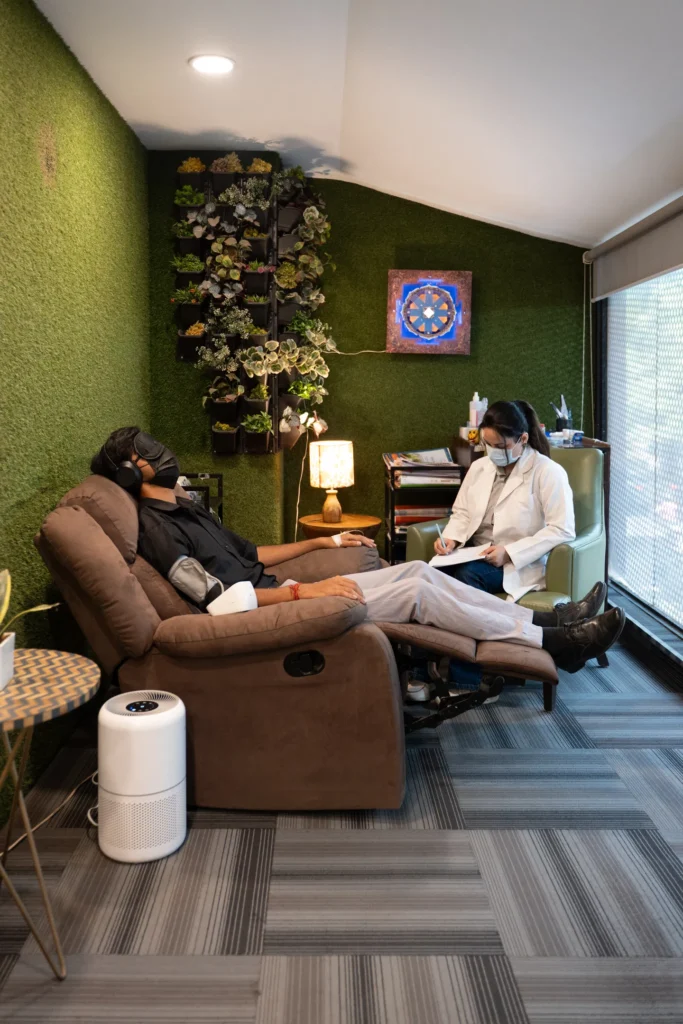
A clinically supervised treatment designed for individuals who haven’t improved with standard approaches. Helps reset neural pathways and supports faster, more noticeable improvement.
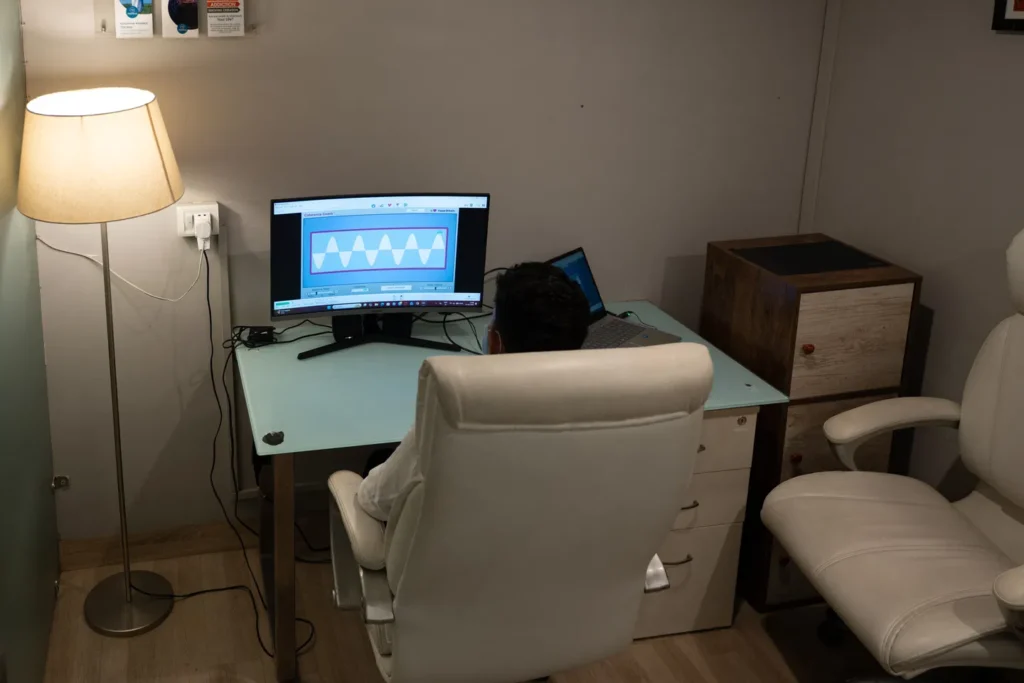
A guided training method that improves how your body responds to stress by regulating your nervous system. Helpful for emotional balance, sleep, and overall resilience.

A training-based approach that helps the brain learn to function more efficiently. Commonly used to improve focus, emotional control, and mental clarity over time.
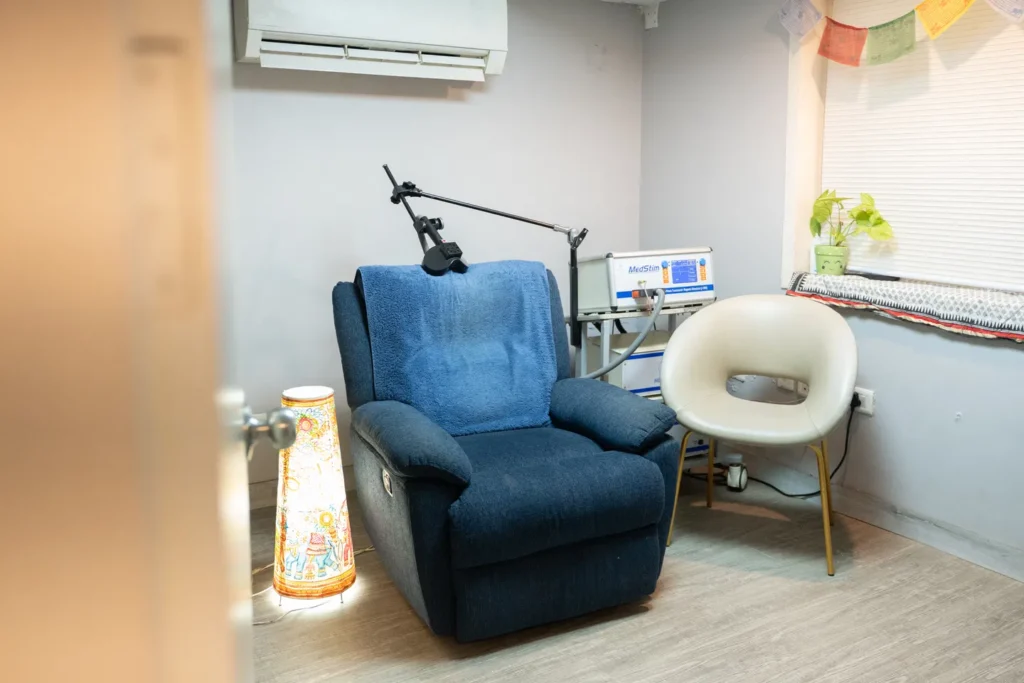
A gentle stimulation technique that enhances brain activity related to attention, cognition, and mood. Often used alongside therapy for improved outcomes.
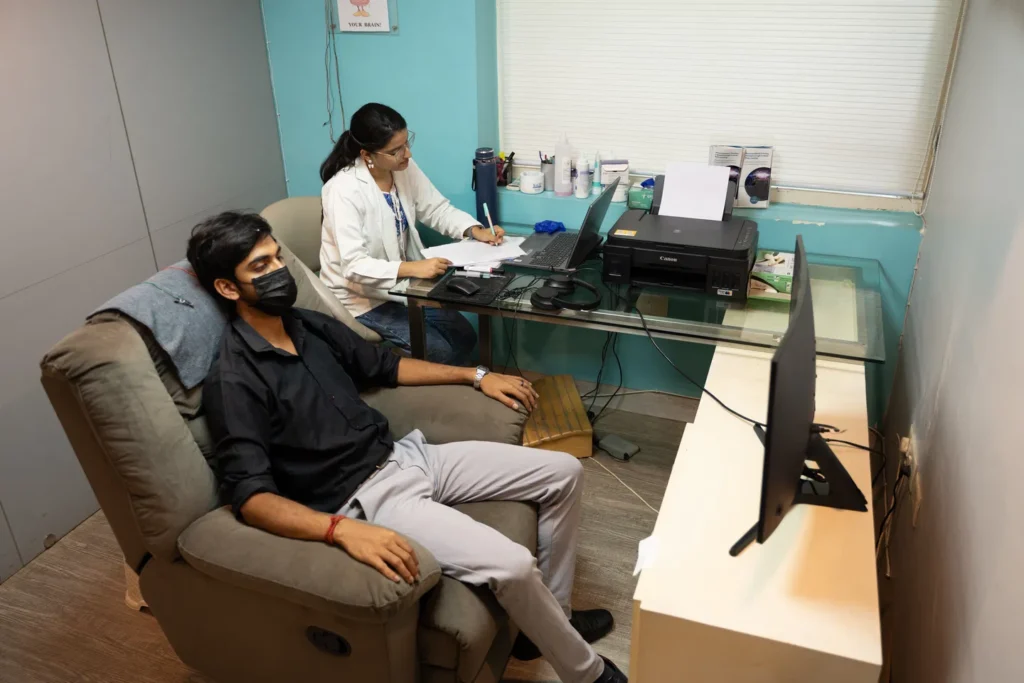
An advanced diagnostic tool that measures brain activity to identify imbalances. Helps create a more targeted and personalized treatment plan.

Transcranial Photobiomodulation (tPBM) is a non-invasive light therapy that uses red and near-infrared light to support brain function, mood, and cognition.
A non-invasive therapy designed to support nervous system regulation, emotional balance, stress reduction, and improved Mental Health through gentle nerve stimulation.

Structured yogic and breathing practices combined with neuroscience-based care to support emotional regulation, stress recovery, mental clarity, and overall well-being.
— A different kind of mental healthcare
How Our Treatments Works
A simple Science-Backed Process
Initial Consultation
We understand your symptoms, concerns, and medical history in detail.
Advanced Assessment
Clinical and brain-based evaluations help us understand your condition better.
Personalized Treatment
Every plan is tailored for effective treatment for depression and emotional Mental Health.
Recovery & Ongoing Support
Ongoing care and guidance for long-term mental illness.
— FAQ
Answers to the questions patients ask before they call
Before beginning treatment, many individuals want to understand the therapies we offer, what to expect during sessions, and which treatment options may best support their mental health and recovery goals.
At Mind Brain Institute, we provide clear guidance, evidence-based care, and personalized support across every stage of the treatment journey — helping individuals feel informed, comfortable, and confident in their care decisions.
Our goal is to create a safe and approachable environment where people can explore advanced neuroscience-backed mental health treatments designed to support long-term emotional Mental Health and overall quality of life.
Yes, therapies such as Neurofeedback, tDCS, and Brain Mapping are often used to support focus, cognitive performance, emotional regulation, and mental clarity.
Some therapies may be recommended for adolescents and young adults depending on their condition, symptoms, and clinical evaluation, helping support personalized mental health treatment and emotional well-being.
Many therapies offered are non-invasive and generally well-tolerated. The treatment team explains potential effects and safety considerations before beginning care.
The timeline varies for each person and treatment type. Some individuals notice gradual improvements within a few sessions, while others may require longer structured care.
Yes, therapies such as Neurofeedback, HRV Biofeedback, and mindfulness-based approaches may help improve stress regulation, sleep quality, and emotional balance.
Yes, many patients explore advanced therapies after limited improvement with medications or traditional approaches, especially in long-term or treatment-resistant cases.