


Neuroplasticity therapy reveals how the brain learns to heal itself
What if the brain you woke up with today isn’t the one you’re stuck with forever? For decades, we were told the brain was “hardwired” by adulthood, leaving those with depression or anxiety feeling trapped in a fixed circuit. Modern science has shattered this myth. Your brain is a dynamic, living landscape, capable of physical transformation through neuroplasticity therapy. This groundbreaking field proves that neural pathways are remarkably resilient and can be reshaped through targeted intervention. By utilizing clinical neuroplasticity treatment, you can move beyond managing symptoms to facilitate deep, structural healing.
The path to recovery is literally hidden within your own neural pathways. Keep reading to learn how neuroplasticity therapy unlocks your brain’s hidden potential to heal itself.
What is the science behind neuroplasticity therapy?
To understand neuroplasticity therapy, you first have to understand the “use it or lose it” principle of the human nervous system. Your brain consists of approximately 86 billion neurons that communicate through gaps called synapses. When you repeat a thought or an action, the chemical signals between those neurons become faster and more efficient. This is known as synaptic plasticity.
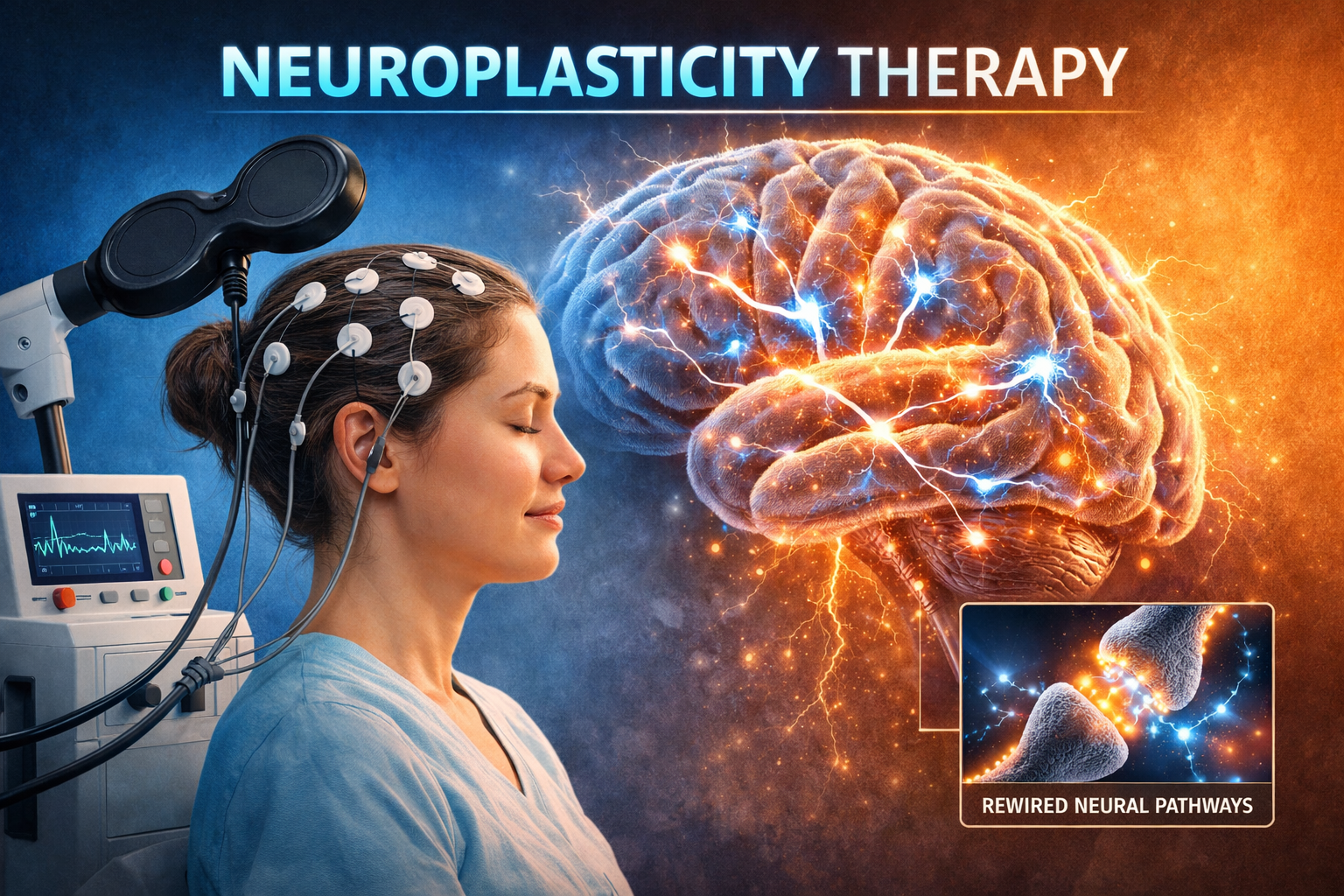
Neuroplasticity therapy leverages this process by introducing specific, high-intensity stimuli to the brain. When we provide the brain with the right environment, whether through electromagnetic stimulation or biochemical support – it begins a process called neurogenesis, which is the creation of new neurons, and synaptogenesis, the formation of new connections. According to research, these changes are most effective when the intervention is consistent and targeted toward specific brain regions like the prefrontal cortex, which governs mood and executive function. By engaging in neuroplasticity therapy, you are essentially “upgrading” your brain’s hardware to better handle the software of daily life.
How does neuroplasticity treatment rewire neural pathways?
You might wonder how a clinical neuroplasticity treatment actually translates into a better mood or sharper focus. The process is much like carving a new path through a dense forest. Initially, the path is overgrown and difficult to walk. However, with repeated use, the path becomes clear, smooth, and eventually, it becomes the route of least resistance.
In a clinical setting, neuroplasticity treatment often involves technologies like Transcranial Magnetic Stimulation (TMS). TMS uses focused magnetic pulses to stimulate neurons in areas of the brain that have become underactive due to depression. This external “nudge” forces the neurons to fire, strengthening their connections over time. This type of neuroplasticity-based treatment has shown meaningful improvement in many individuals who did not find sufficient relief through traditional medication. By gently altering the brain’s electrical activity, it helps build a more lasting foundation for mental health, rather than relying only on daily pills.
How long does it take for neuroplasticity therapy to show results?
Patience is a vital part of the healing process. While your brain begins changing at a cellular level the moment you start neuroplasticity therapy, visible changes in how you feel typically take a bit longer. Most patients begin to notice a “lifting” of their symptoms within 2 to 4 weeks of consistent treatment, with the most significant shifts occurring between weeks 6 and 8.
The reason for this timeline is biological. The brain first undergoes “chemical plasticity”- short-term changes in the amount of signaling chemicals (neurotransmitters). It isn’t until later that “structural plasticity” occurs, where the brain actually changes its physical shape and connectivity. This is why consistency in neuroplasticity therapy is so critical. Think of it like going to the gym; one workout won’t change your physique, but a dedicated two-month program will transform your metabolic health. By committing to a full course of neuroplasticity therapy, you allow your brain the time it needs to move from temporary chemical shifts to permanent structural healing.
Are the effects of neuroplasticity treatment permanent?
One of the most common questions we hear is whether the results of neuroplasticity treatment will last a lifetime. The short answer is: yes, but with a caveat. Because neuroplasticity treatment builds physical neural pathways, those connections are much more stable than the temporary chemical balance provided by antidepressants. However, the brain remains plastic throughout your entire life. This means that while neuroplasticity treatment can build a “new highway” for mental health, you must continue to “drive” on that highway by maintaining healthy habits, such as mindfulness, proper sleep, and cognitive engagement. At Mind Brain Institute, our goal is to use neuroplasticity treatment to get you to a “point of no return” – a state where your brain is healthy enough to sustain its own wellness without constant clinical intervention.
Why is neuroplasticity therapy essential for mental health recovery?
Standard treatments for mental health often act as a “bandage.” They may numb the pain or provide a temporary boost in serotonin, but they rarely address the underlying structural atrophy that occurs with chronic stress and depression. This is where neuroplasticity therapy becomes a game-changer. Chronic depression is often associated with a shrinking of the hippocampus and a weakening of the prefrontal cortex.
By prioritizing neuroplasticity therapy, we are directly addressing the “root cause” of the problem. Instead of just managing symptoms, we are encouraging the brain to regrow its lost volume and repair its broken bridges. This approach is essential because it empowers the patient. When you understand that your brain can literally change for the better, the feeling of hopelessness often disappears. Neuroplasticity therapy provides the biological evidence that recovery is not just a dream – it is a measurable, physical process.
Which conditions benefit most from neuroplasticity treatment?
While everyone’s brain is unique, certain conditions have shown extraordinary responses to targeted neuroplasticity treatment. Because these conditions are often rooted in “stuck” or “maladaptive” neural loops, breaking those cycles with clinical stimulation is highly effective.
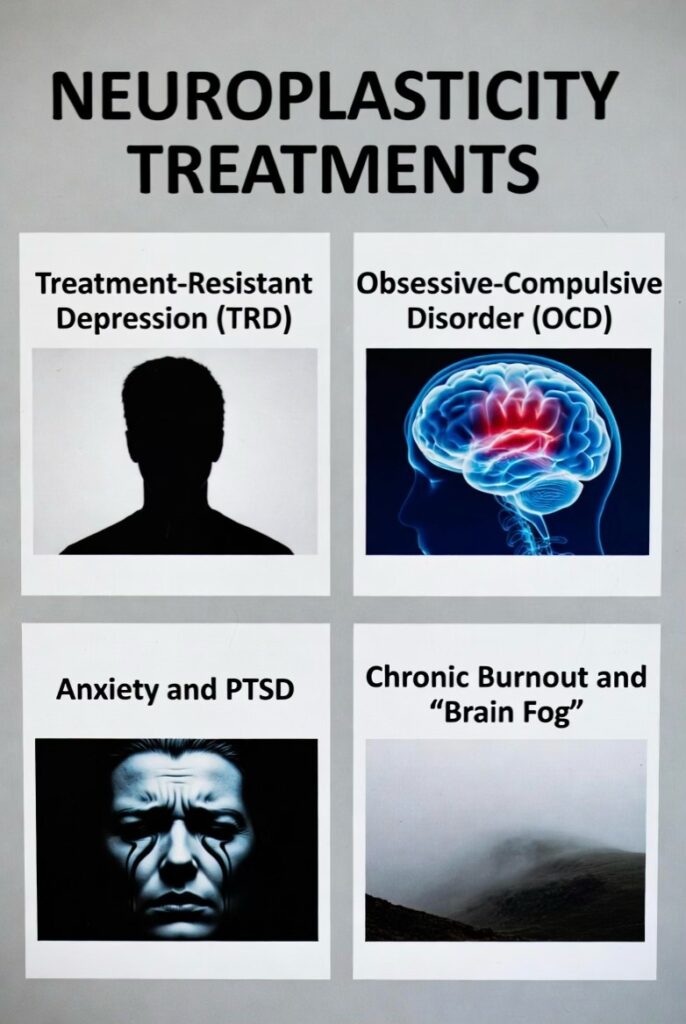
- Treatment-Resistant Depression (TRD): For those who haven’t responded to SSRIs, neuroplasticity treatment via TMS is often the “key” that finally unlocks the door to remission.
- Obsessive-Compulsive Disorder (OCD): By targeting the overactive circuits in the brain, we can help reduce the “urgency” of intrusive thoughts.
- Anxiety and PTSD: Neuroplasticity treatment helps calm the overactive amygdala (the brain’s fear center) and strengthens the prefrontal cortex’s ability to regulate emotions.
- Chronic Burnout and “Brain Fog”: Cognitive decline caused by high stress can be reversed by re-engaging the brain’s plasticity through specialized protocols.
At Mind Brain Institute, we utilize these advanced methods to ensure that even the most stubborn symptoms are met with a powerful, evidence-based neuroplasticity treatment.
What makes our neuroplasticity therapy approach unique?
At Mind Brain Institute, we don’t believe in a one-size-fits-all model. Every brain has its own “map,” and your neuroplasticity therapy should reflect that. We utilize advanced QEEG Brain Mapping to see exactly which areas of your brain are struggling. This allows us to customize our neuroplasticity therapy protocols to your specific needs, rather than using generic settings.
Furthermore, we often combine modalities. We might integrate TMS with other supportive therapies to maximize the “plastic window” – the period when your brain is most open to change. This holistic, data-driven approach to neuroplasticity therapy ensures that we aren’t just guessing; we are precisely targeting the areas that will yield the greatest improvement in your quality of life.
How can you start your neuroplasticity treatment today?
The journey toward a healthier brain starts with a single realization: you are not stuck. Your brain is a masterpiece in progress, and with the right neuroplasticity treatment, you can redraw the lines of your life. Whether you are struggling with depression that won’t budge or anxiety that feels overwhelming, neuroplasticity therapy offers a path forward that is backed by science and proven by results.
If you are ready to stop managing your symptoms and start changing your brain, we invite you to reach out to our team. Your recovery is a biological possibility, and it begins the moment you decide to invest in your brain’s natural ability to heal.

